
The following article is written by Mekonnen Solomon, a former Director of Horticultural Investment, Ministry of Agriculture in Ethiopia.
In recent years, the floral industry has found itself in a whirlwind of rapidly changing global and local regulations, leaving service provision and implementation struggling to keep pace. As technology evolves, the business landscape has become increasingly challenging. This raises a tantalizing question: how can the floriculture sector not only survive but truly thrive in the face of these formidable obstacles?
Just last week, I came across news emphasizing the pressing necessity for flower exporters to embrace more responsible chemical application practices than ever before. The latest advisory report from the Netherlands Food and Consumer Product Safety Authority, published on January 21, 2026, marks a crucial turning point for the global cut-flower industry and its supply chain. This is especially significant for non-European Union top flower producers and exporters such as Ethiopia, Kenya, Ecuador, and Colombia. Based on extensive sampling of imported roses collected over the past two seasons, the report reveals that the levels of these residues exceed established safety thresholds and limits set by regulatory agencies. Irresponsible use of chemicals and their residues presents notable occupational health risks to florists, auction personnel, and inspectors who handle the flowers routinely.
Furthermore, the report underscores environmental implications, particularly the potential obscenity of soil ecosystems through contamination that impairs beneficial organisms such as bacteria, fungi, earthworms and bees. Such disruptions compromise essential processes including pollination, nutrient cycling, and soil fertility, especially when floral waste integrates into organic waste streams or composting operations.
The underlying cause lies in intensive treatments and chemicals applied in exporting countries to satisfy stringent European Union phytosanitary requirements; actions not directly supervised by Dutch authorities due to international law. Under international law and the International Plant Protection Convention, it is the responsibility of the exporting country to inspect and certify that goods meet the import requirements of the destination country. In Ethiopia, it is the newly established Ethiopian Agricultural Authority responsible for scrutinising and confirming that exportable flowers meet the import requirements of the Netherlands and European Union member countries. At this stage, I cannot definitively speak about the Authority's capacity to meticulously examine the chemical residual level of flower products and certify compliance with the specific current standards of the destination market
In response, the Netherlands Food and Consumer Product Safety Authority suggests a complement of forward-thinking measures: establishing regulatory residue limits for non-EU imports, enacting interim worker protections, initiating consumer awareness campaigns, improving waste management protocols, strengthening border surveillance, broadening research to encompass other ornamentals and edible flowers, and promoting voluntary supply-chain initiatives that surpass minimum legal standards.
I would argue that the true significance of Ethiopia's horticulture industry lies not just in its impressive $500 million+ revenue, but in its role as a vital lifeline for thousands of families. To me, the roughly 84 active farms represent more than just business; they are centers of opportunity that underscore why this sector is the most critical engine for employment and foreign exchange in the country today. With 16 years of immersion in Ethiopia's floriculture landscape, I view this report not as a mere warning, but as an electrifying catalyst—a bold invitation to leapfrog toward unparalleled excellence. Ethiopian growers have long succeeded under Europe's rigorous demands, mastering phytosanitary compliance, quality benchmarks, and sustainability certifications with remarkable agility. The Netherlands Food and Consumer Product Safety Authority's findings dovetail with the EU's accelerating push toward harmonized safeguards, now extending scrutiny to pesticide residues in non-food ornamentals, despite the current absence of binding maximum residue levels (MRLs) for roses and summer flowers.
Admittedly, the path ahead sharpens competition: intensified sampling, shipment-by-shipment residue testing, and potentially lowered maximum residue levels could elevate rejection risks, compliance expenditures, and market disadvantages for operations lacking sophisticated residue-management systems. Short-term pressures may necessitate accelerated shifts to biological controls, organic alternatives, and low-toxicity integrated pest management (IPM)—with non-compliant shipments facing destruction, rapid alerts, or outright import bans.
Yet herein lies the exhilarating opportunity. Ethiopian floriculture has already demonstrated company leadership: since 2019, growers have slashed usage of the most environmentally harmful products by an impressive 56%, fuelled by strategic investments in IPM, biological agents, digital training platforms for occupational health and environmental stewardship, and collaborative efforts against pests such as the False Codling Moth. Rather than viewing regulation as a straitjacket, proactive alignment—anticipating food-crop-equivalent residue thresholds—positions Ethiopian roses as paragons of purity and sustainability. This differentiation captivates premium buyers, fortifies partnerships, mitigates reputational vulnerabilities, and locks in enduring EU market access.
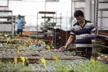
 © Ethiopian Ministry of Agriculture
The sector's dynamism amplifies these stakes. Evolving EU standards mirror surging consumer demand for ethical, eco-conscious products. Concurrently, climate change unleashes formidable pressures—escalating temperatures, erratic precipitation, prolonged droughts, and water scarcity—that challenge high-altitude rose cultivation dependent on stable conditions. Ethiopia's diverse agro-ecology offers resilience, yet intensified stressors demand adaptive innovation: robust residue-monitoring protocols, end-to-end traceability, accelerated climate-smart practices, and diversified horticultural portfolios to hedge against single-product vulnerabilities.
Despite its importance, some critics argue that in an era of rising trade protectionism and strict marketing standards, diversifying horticultural exportable products is a key strategy for building sustainable, competitive, and resilient marketing systems. They argue that relying on a Flower export alone would one day make Ethiopia vulnerable to sudden import bans or lowered maximum chemical residue level. Diversification of exportable products allows for easier redirection of trade if one product is rejected, reducing overall economic impact. The diversification of exportable agricultural products is absolutely necessary and critical for Ethiopia as stringent global requirements such as food safety, maximum residue levels, and environmental standards become increasingly rigorous. As international markets impose stricter sanitary and phytosanitary (SPS) measures, diversifying products allows exporters to spread risks, access new markets with different standards, and move up the value
Diversification emerges as a non-negotiable imperative. Over-reliance on cut flowers exposes the sector to abrupt import restrictions or tightened MRLs amid rising global trade protectionism and sanitary-phytosanitary (SPS) rigor. Broadening the export basket—encompassing fruits, vegetables, and other ornamentals—spreads risk, unlocks markets with varying standards, and elevates value chains for greater resilience and economic impact.
In conclusion, the Netherlands Food and Consumer Product Safety Authority report is far more than a cautionary signal; it is a thrilling summons to redefine excellence. Through coordinated action—government facilitation of technical support and funding via the Ministry of Agriculture, deepened international alliances with Dutch auctions, breeders, and certifiers, and an unwavering commitment to sustainability as a core competitive edge—Ethiopian floriculture can transform regulatory evolution from perceived impediment into a turbocharged driver of innovation, quality, and prosperity.
Global regulatory tightening is not a barrier; it is the forge that tempers superior standards, sharpens market positioning, and secures long-term dominance in a discerning arena. Ethiopia's floral renaissance has already proven its mettle—proactive embrace of these standards will propel it to even greater heights, delivering enduring benefits for farms, workers, communities, and the nation.
For more information
Mekonnen Solomon
Email: [email protected]