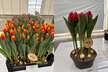

In a push toward sustainable, collaborative agriculture adapted to local territories, Centro Ceres has conducted a series of participatory workshops focused on bioinput production with farmers in Longotoma. The initiative combined knowledge transfer, mutual learning, and recognition of traditional farming expertise. It was carried out under the Vinculación con el Medio (VcM) project of the Pontificia Universidad Católica de Valparaíso (PUCV) and involved students from the School of Agronomy.
 © Centro Ceres
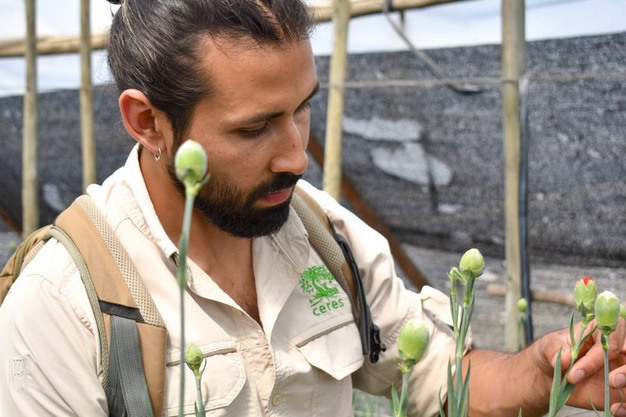
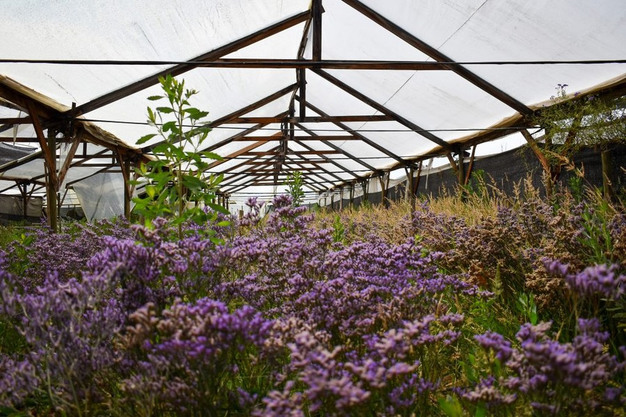
From the Maitén Largo Biofactory, a community space that has enabled a group of flower growers to advance in the production of bioinputs such as silage, microorganism activation, and bocashi—reducing production costs and improving soil health, agronomist Diego Machuca of Centro Ceres led hands-on sessions for preparing biopreparations. He also facilitated dialogue sessions where participants shared experiences and challenges specific to the floriculture sector.
The origins of this biofactory are linked to the territorial work promoted by the Servicio de Asesoría Técnica (SAT) program of INDAP. Carolina Conget, technical advisor and specialist in flowers and biopreparations, explains the associative nature of the project: "The users who participate belong to the SAT INDAP program. We were informed of an investment project for the associative projects fund, which means that several farmers join and contribute collectively to build a biofactory. I applied on behalf of the users, the project was awarded, and I began advising them," he says.
 © Centro Ceres
This process not only allowed the infrastructure to be established, but also helped consolidate a learning community. "We held some workshops; I was already advising them through the program, but specifically for the biofactory, so they could learn certain things, and I could learn too. I've learned a lot from them," Conget recounts, emphasizing the trust and organizational autonomy built among the flower growers.
Bioinput production began in 2023, after a summer dedicated to training in compost and bocashi. Since then, farmers have deepened their expertise, participating in specialized courses and analyzing their biopreparations to identify the microorganisms they are cultivating. This professionalization has allowed results to be validated in the field, with trials showing significant increases in both aerial and root biomass, up to 45% more root mass in crops treated with bioinputs compared to conventional fertilization.
The initiative also carries notable economic benefits. Faced with the steady rise of synthetic chemical fertilizers, locally produced bioinputs provide a low-cost alternative using inputs available on the farm. "The costs are very low," Carolina Conget emphasizes, noting that only minor supplements such as bran or molasses are required.
From Centro Ceres, Diego Machuca highlights the experience as a concrete response to current agricultural challenges: "We've seen that soil conditions have deteriorated drastically over the decades. Incorporating these biopreparations for the fertility of soils, crops, and also the health of farmers addresses a real need," he says. He also underlines the value of knowledge exchange: "It's a joy for me to share knowledge with farmers from the area and also to immerse myself in the world of floriculture. This transition from synthetic chemical fertilizers to biofertilizers has been extremely enriching."
For more information:
Ceres Centre
Av. San Francisco #1600, La Palma, Quillota, Valparaíso Region, Chile
[email protected]
www.centroceres.cl