

OBS Business School, an institution belonging to the higher education network Planeta Formación y Universidades, has recently published the report Analizando el Futuro de la Industria Floral (A Glimpse into the Future of the Flower Industry), written by professors Lucía Somalo and Claudia Núñez. At the beginning of 2025, this market's turnover stood at between 31 and 39 billion dollars globally. It also remains one of the most labor-intensive drivers of employment in the agricultural sector.
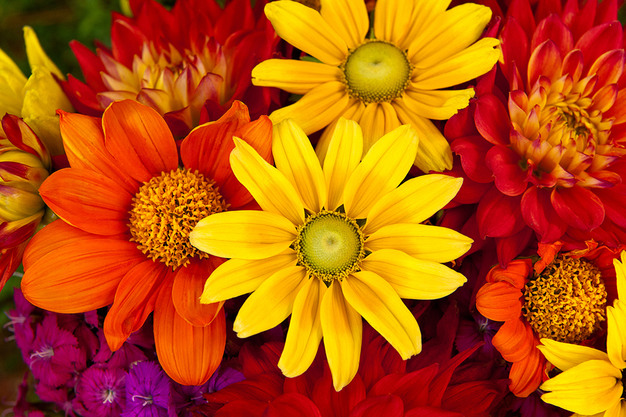 © Dwight Smith | Dreamstime
"Historically, the sector has operated with predictable stability, with demand influenced by social rituals and biological cycles. However, the socio-economic transformation of the late 20th century has led to an absolute deseasonalization of the market. Through the use of high-tech greenhouses and extreme cold logistics, the industry has succeeded in overcoming geographical and seasonal limitations. Flowers have evolved from a biological product to a global commodity. However, this efficiency has also paradoxically resulted in very tight margins and increasing vulnerability (the net profit of retail florists is at critical levels of 3-5%). The sector has been under pressure due to climate and energy-related factors, inflation and last mile logistical challenges and has been forced into operational and strategic restructuring."
"The flower industry is currently at a turning point. Pressure from climate and energy-related factors, with their cost and sustainability implications, is no longer a distant threat, but a daily reality that calls for urgent adaptations in production. At the same time, the digital models that had become strongly prominent in the last decade are now inevitably undergoing a reform."
"The major flower production and distribution hubs are in the Netherlands, Colombia, Ecuador and Kenya (Spain is the 13th largest exporter). This geographical hyper-concentration is a double-edged sword. On the one hand, it allows economies of scale and a standardization that is necessary for the mass market; on the other hand, it also creates a systemic dependency where any climatic, sanitary or political disturbance might cause a shockwave that could destabilize prices and supply worldwide."
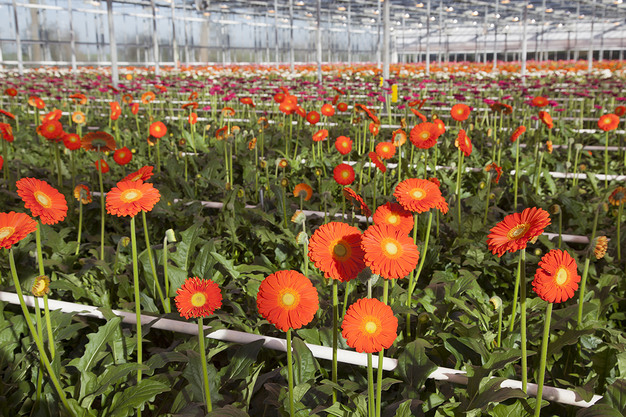 © Ahavelaar | Dreamstime
Flower consumption
The cultural transformation driven by the younger generation has been a key driver of this change. For them, flowers have transcended their role of occasional gift or luxury and become an element of self-care, personal expression and digital content (it already represents 38% of the total market in European urban centers). People buying flowers for themselves has been normalized to the extent that it is now on a par with other wellbeing routines, such as conscious eating or interior decoration."
"There's a growing rejection of industrial standardization and an appreciation of authenticity, imperfection and ethical consistency. Interest is shifting from flowers as a physical object to the experience they can help provide, which explains the rise of flower bars and co-creation workshops. Social media has turned flower bouquets into an entire narrative; how they are bought, how they are arranged, where they are placed in the home and even how they wilt. They have become an extension of one's identity."
"This is creating new opportunities for florists, who need to be able to offer selections that connect deeply with the values of the shopper; floral products that are 'Instagrammable'. This means designs that capture visual attention presented in thoughtful packaging, conceived as part of the ritual and experience shared on social media. The emphasis on home and personal wellness subscriptions also offers potential for growth. And of course, big events such as weddings remain very important. On such occasions, asymmetrical bouquets, unexpected color combinations, imperfect greens and the use of wild or less traditionally elegant flowers are increasingly popular."
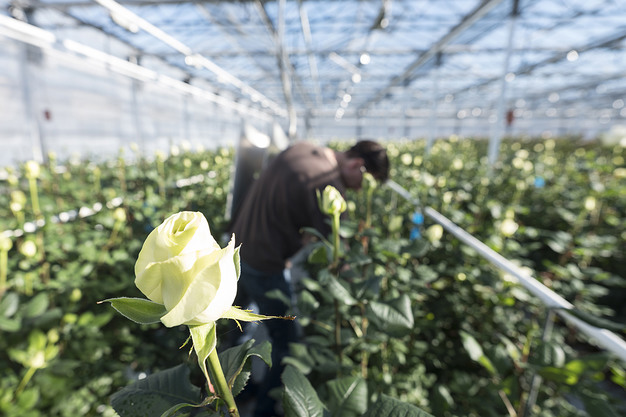 © Ahavelaar | Dreamstime
"A crucial turning point in this dynamic has been the resurgence of public debate on the use of pesticides in floriculture. The lack of legal limits on the presence of chemical residues in flowers, like those that apply to food products, has become apparent. Buyers, for their part, are increasingly demanding transparency regarding the product's origin, cultivation processes and environmental impact."
Source: obsbusiness.school