


U.S. Customs and Border Protection agriculture specialists are on track for another record-setting year as they work to keep America safe by imported cut flower stems ahead of Valentine's Day.
As the busiest season for flower imports approaches, CBP has already inspected more than 1 billion cut flowers, intercepting over 600 harmful pests and plant diseases from hitch-hiking into the United States. By the time Valentine's Day arrives, CBP expects to top last year's record of 1.3 billion stem inspections.
"Every cut flower inspected by CBP is a testament to our vigilance and unwavering commitment to preventing the entry of plant pests and diseases without compromising our agricultural protection," said Acting Executive Director Suzette Kelly, of CBP's Agriculture Programs and Trade Liaison.
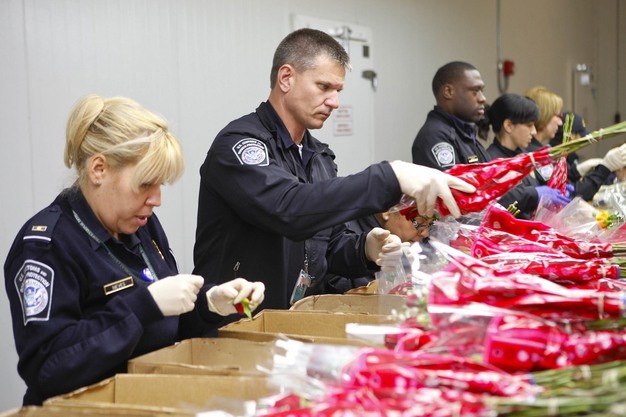 © US Customs and Border ProtectionCBP Agriculture Specialists inspect flowers in Miami
Although a relatively small number of harmful pests are found among the millions of stems inspected, even a single one can cause significant damage to U.S. crops. The most common pest to date, Entyloma Meridaonale, is a pathogenic fungus that can lead to the death of leaf tissue, reducing the plant's ability to photosynthesize. The second-most common pest, Noctuidae (moth larvae), causes severe damage by cutting seedlings at the base, defoliating plants, or boring into fruits and stems.
Miami International Airport remains the primary port of entry for commercial flower stems, processing approximately 88% of cut flower imports, which come from countries like Colombia, Ecuador and Mexico. The ports at Otay Mesa and Los Angeles International Airport handle most of the remaining 12%. Roses, chrysanthemums and carnations are the three most common types of imported flowers.
Source: US Customs and Border Protection