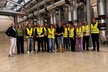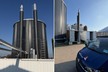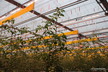
Tulip forcing company Rainbow Colors in Andijk, in the province of North Holland in the Netherlands, has installed a solid oxide electrolyser for the production of green hydrogen. According to the project partners, it is the first agricultural business worldwide to implement this technology. With a capacity of 1 megawatt, the installation ranks among the largest operational solid oxide electrolysers globally and represents a milestone for hydrogen development in the North Holland North region.
The project is being carried out in cooperation with Danish technology company Dynelectro. The required infrastructure is being developed by the Dutch firm Ekinetix. The installation will be applied and tested within the regional initiative Fieldlab Waterstof in de Agri, which is working on the development of a hydrogen network for the agricultural sector in North Holland North.
Tulip grower Rainbow Colors and green hydrogen production
Rainbow Colors has been one of the pilot locations within the project since 2023, focusing on hydrogen production. By using surplus solar power for hydrogen generation, combined with battery storage, the company aims to achieve continuous hydrogen production.
According to the technology partners, solid oxide electrolysers are more efficient and less prone to wear than conventional electrolysers. Their longer lifespan and higher efficiency are expected to reduce the cost price of hydrogen. The system is also intended to offer a regional solution to grid congestion while increasing the availability of an emission-free energy carrier.
Project partners describe the installation as pioneering, not only because Rainbow Colors is the first agricultural user of a solid oxide electrolyser, but also because the unit will be the third largest operational installation of its kind worldwide. The company is seen as a reference case for other agricultural businesses in North Holland North seeking local solutions to grid congestion and high energy costs, as well as for other parties considering the adoption of solid oxide electrolysis technology.
Beau Broen, project leader at New Energy Coalition and coordinator of the hydrogen pilot projects within Fieldlab Waterstof in de Agri, said: "It is impressive to see how international innovation comes together in this project. By implementing Dynelectro's electrolyser at project partner Rainbow Colors, the region is taking an important step towards decentralized hydrogen production. It also provides an economic boost by making affordable green hydrogen available. The project underlines the innovative role North Holland North plays in the energy transition."
Impact for the Netherlands
With the commissioning of this hydrogen production facility, locally produced green hydrogen becomes available in the Netherlands. According to the project partners, this helps address the so-called chicken-and-egg dilemma surrounding green hydrogen, where supply and demand development depend on each other.
By using surplus renewable energy generated in the region, hydrogen can be produced at a competitive cost price of below €10 per kilogram and deployed locally. This is expected to support further development of the hydrogen market.
The project demonstrates that hydrogen is not only a long-term prospect, but already a practical and accessible emission-free energy option for businesses in North Holland North.
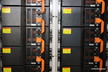
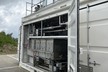
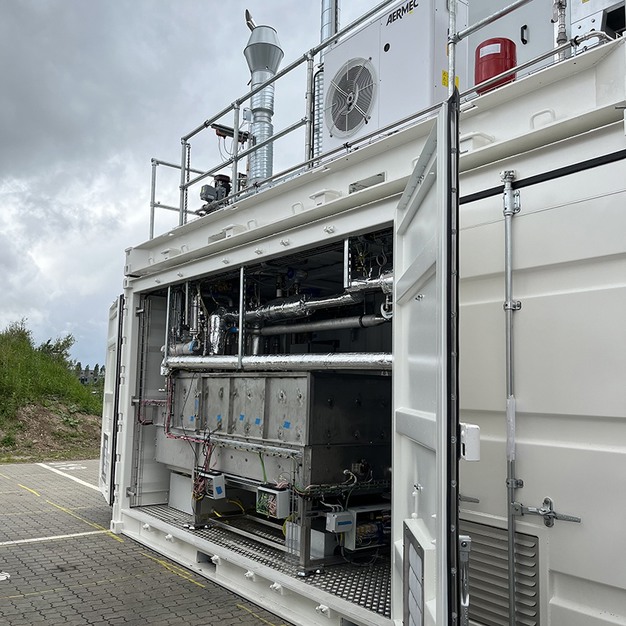 © New Energy Coalition Photo right: A fully built and operational solid oxide electrolyzer currently being tested for factory acceptance in Denmark. Dynelectro's electrolysis uses high temperature electrolysis at 750 degrees Celsius. By using patented technology, the lifespan of the 'stacks' can be significantly extended. By briefly removing electrical voltage from the cells, degradation is greatly reduced. Dynelectro refers to this technique as the AC:DC methodology. When residual heat is available, an efficiency of 90% can be achieved with this technology. The electrolyzer units are modular, making them easy to stack, allowing for small beginnings and easy scaling.
Fieldlab Waterstof in Agri
Fieldlab Waterstof in Agri (Fieldlab Hydrigen in Agri) is a multi-year regional innovation program in the Netherlands focused on the production and application of hydrogen within the agricultural sector. Across several locations in North Holland North, partners are working on the development of a complete hydrogen value chain, from production and storage to distribution and end use.
The collaboration includes local businesses and knowledge institutions in Alkmaar, Wieringerwerf, Schagen, Dirkshorn, Andijk, and Kolhorn. The project is linked to broader Hydrogen Valley developments, through which the province of North Holland positions itself as an innovative hydrogen region.
Partners in the initiative include Ontwikkelingsbedrijf Noord-Holland Noord (the regional development agency), New Energy Coalition, Greenport NHN, Vonk, Inholland University of Applied Sciences, Rainbow Colors, contractor Loonbedrijf Sturm-Jacobs, Vertify, BNR-Energy, Avia Marees, Next Generation Machinery, Hygro, and Rabobank. The project is co-financed by Kansen voor West 3 through the European Regional Development Fund (ERDF) and by Rabobank.
For more information:
New Energy Coalition
[email protected]
www.newenergycoalition.org