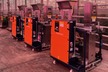


Think of the most state-of-the-art controlled environment agriculture. Think biological pest management and digitally controlled humidity. There is precisely diffused light and photoperiod control. Temperature, ventilation and CO2 are all automated. And now consider that in the time it's taken you to read this introduction, another 15 blooms of daisies have been computer-scanned, analyzed and packed here.
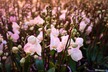
Over three generations of family ownership starting in 1952, Hollandia has evolved from a 2-acre tomato farm in Maple Ridge, British Columbia, to become one of North America's largest producers of gerbera daisies. Some 30 million blooms a year are grown at a 22-acre operation at Pitt Meadows, British Columbia.
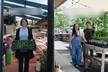
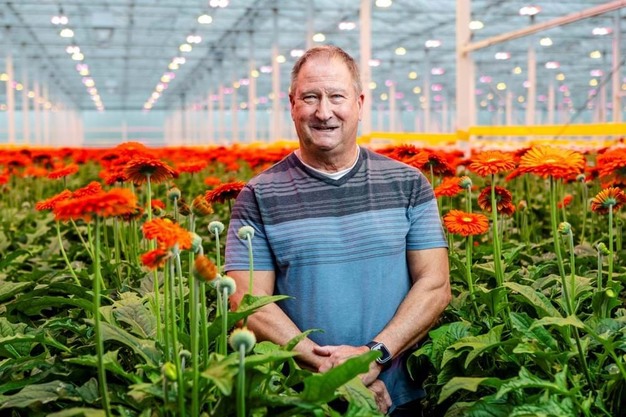
Terry Pastorek is Hollandia's Operations Manager. He started in 1982 and his main goal today is to provide Hollandia's customers with a quality flower.
"When our customers take them home, they'll get a good 10 to 12 days vase life," he says.
 © Ludvig Svensson
Solving daylength and humidity challenges with double screens
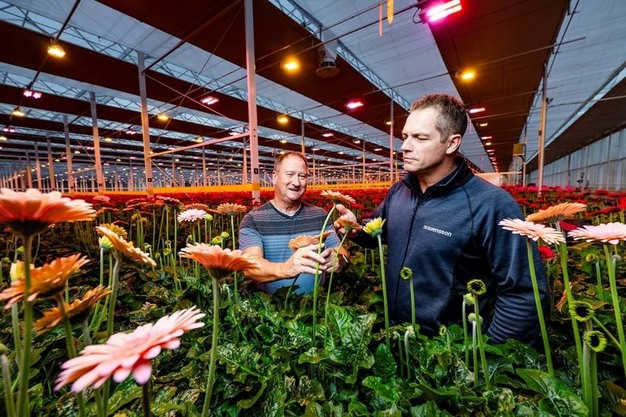
Pastorek relies on a Priva system and about 70 colleagues, to manage the production and packing of 100 different gerbera varieties. And overhead, a Svensson Obscura 10070 FR WB+BW screen takes care of the very specific daylength the daisies need to thrive.
"We couldn't grow without it because we have to control the daylight in the summertime," says Pastorek. "They can't have 14 hours – they need ten and a half, 11 or 12 hours."
The Harmony 2315 O FR screen provides a diffuse light, amplifying the effect of diffuse glass in the glasshouse built for Hollandia by Prins Greenhouses. The Harmony screen is used mainly in the summertime, but it's also deployed in the fall and winter: "Not as much as in the summertime, but we will still close it at night to avoid the negative radiation that leaves the greenhouse at sunset," he says.
Pastorek says the Harmony screen provides more light and a more even quality of light spread through the crop: "With the glass we have, the two screens combined make a real nice difference for the quality of the flowers," says Terry Pastorek. Together with the installation of Philips LED toplighting from Signify, the Harmony screen supports a more uniform light environment, improving energy use and flower consistency under supplemental lighting.
Overcoming humidity challenges
Hollandia's main climate challenge before installing the diffusing shade cloth was that humidity was too low.
"With the old screens we would have to leave a gap in there, but now with the Harmony we can close at 100% which gives a way more stable environment for our gerbera daisies," says Pastorek. With the combination of Obscura and Harmony, the sunlight spreads out to the entire crop, he says. "You get better growth and better-quality flowers for our customers."
 © Ludvig Svensson
Driving efficiency through screens, systems, and experience
Terry Pastorek is an unapologetic advocate of growing tech. He absolutely recommends growers to use a Priva system to automate the controlled environment and the greenhouse screens. "You need good screens, both for the nighttime heat retention and in the spring and summer," he adds. "Then you need a light diffusion screen so it will not just get at the top of the plant, but diffuse the light, and scatter it everywhere. The result is you get way more energy out of the sun than without it."
Hollandia was able to take advantage of a regional rebate program for its Obscura screens. The program requires an energy saving value of at least 60% and with the Obscura, the greenhouse in fact saves about 70%.
The pursuit of energy efficiency also led to an award for energy conservation from British Columbia Hydro: "We were able to do that by closing our screens earlier and by gapping a few per cent to let any excess heat out," explains Pastorek.
Why trusted partnerships are part of Pastorek's success strategy
Pastorek says he has worked alongside Svensson for a quarter of a century now and he's been happy with the relationship, including when Hollandia began to use horticultural LED systems from Signify.
"It's been great to work with Svensson. A good quality product, always delivered on time and they fully back their warranties," he says. "We're proud to be partners with Svensson and Signify to help us grow the best quality gerberas in the world."
For Pastorek, these partnerships are not just part of the past – they are central to Hollandia's future. With trusted collaborators like Svensson, Signify, and Prins, he has built a foundation of reliability, innovation, and a shared commitment to quality. That combination gives him the confidence to keep pushing forward and continue delivering world-class Gerberas, year after year.
For more information:
Ludvig Svensson
[email protected]
www.ludvigsvensson.com