

In the Netherlands, the Netherlands Enterprise Agency (RVO) is funding the SPROUT project with a total budget of €5.6 million. The project aims to support the greenhouse sector in phasing out fossil fuels while contributing to the Dutch energy transition. The consortium is led by Francesco Lombardi of the Faculty of Technology, Policy and Management (TPM) at TU Delft.
Greenhouses in the Netherlands currently rely largely on gas-fired combined heat and power (CHP) systems. These units generate electricity, heat and CO₂ for crop production. They also supply electricity to the national grid, accounting for up to 11% of annual electricity production. Because CHP installations can generate power when needed, they represent around 10% of the country's flexible electricity capacity. This flexibility is important for balancing the grid, particularly as the share of solar and wind energy continues to grow.
Flexibility is crucial
To meet climate targets, greenhouses will need to move away from gas-fired CHP systems and switch to renewable energy sources such as geothermal energy and solar power. However, if this transition takes place without changes in the way greenhouses interact with the electricity grid, the sector could shift from being a flexible energy supplier to becoming a relatively inflexible energy consumer. This would reduce overall grid flexibility and could lead to additional investments in back-up power plants, as is already happening in some regions.
The SPROUT project, which stands for System-Positive, Replicable, Optimised Urban-horticultural Transitions, aims to address this challenge by supporting the development of Multi Carrier Energy Hubs (MC EHs) in the greenhouse industry. These hubs combine different forms of renewable generation, energy conversion and storage across multiple energy carriers, including electricity, heat, hydrogen and CO₂. By integrating these flows in a coordinated way, the hubs can meet the energy needs of greenhouses while also helping the national energy system absorb more renewable energy and reduce grid congestion.
Such hubs are described as "system-positive" because they increase, rather than decrease, grid flexibility. As Lombardi explains, "The project turns horticulture into an accelerator of the Dutch energy transition."
From theory to practice
SPROUT will demonstrate the concept in practice at a commercial greenhouse in Monster, in the province of South Holland. In addition, the project will develop tools to support wider adoption within the sector. These include a web-based application that allows growers to design an energy hub tailored to their specific situation, as well as blueprints for viable business models.
Project partners
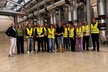
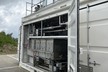
The project is coordinated by TU Delft's Faculty of Technology, Policy and Management, in collaboration with the Faculty of Mechanical Engineering, The Green Village, where a small-scale pilot is being conducted, and the Innovation & Impact Centre. Other partners include Division Q, eFuelution, Resourcefully and Westland Infra, as well as researchers from Leiden University and Wageningen University & Research.
Source: TU Delft