

Every February 14, florists, markets and streets fill with colour and fragrance. Flowers become one of the most common gifts to express love and affection and to celebrate Valentine's Day.
On this date, roses, carnations, gerberas, lilies and tulips take centre stage. Yet it is rare to stop and think about everything behind a bouquet of flowers, where they come from, the work in the fields, the climate, water needs and management, and the decisions that make it possible for those flowers to reach consumers fresh.
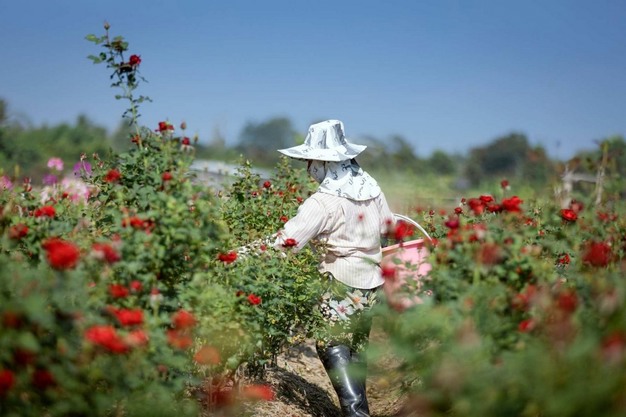
In Mexico, the production of flowers and ornamental plants is an agricultural activity of major economic and social importance. Across the country, thousands of producers depend on this sector, which generates employment and drives local economies, particularly in rural areas.
 © Universidad de Guadalajara
During February, flower demand increases significantly. This requires strategic planning and efficient crop management to meet deadlines and deliver the quality the market expects.
Which flowers are given on February 14
Among the flowers with the highest demand in February are roses, carnations, gerberas and lilies. The main producing states are the State of Mexico, Puebla and Morelos, where climatic conditions, growers' experience and the use of technologies such as greenhouses allow supply not only during February, but throughout the year.
Unlike other flower species associated with specific celebrations, such as poinsettias or marigolds, the flowers marketed on February 14 are part of a production system that must respond to clearly defined demand peaks. For this reason, climate control, water management and plant health are critical factors.
Climate change and the challenges facing floriculture
Floriculture is one of the agricultural activities most sensitive to climate variability. Changes in temperature, irregular rainfall, wind, drought and increased pressure from pests and diseases can all affect the availability and quality of flowers.
In the current context, where climate change has become a tangible reality, these factors are increasingly unpredictable.
For high demand flowers, such as those sold around February 14, higher temperatures can accelerate flowering, reduce shelf life or affect size and appearance. At the same time, water scarcity or uneven distribution forces growers to optimise irrigation and increasingly rely on technologies that allow more efficient water use.
Climate change increases both risks and production costs for floriculture, making forward looking decision making essential to anticipate scenarios that were once uncommon.
When climate defines what can be grown: the case of tulips
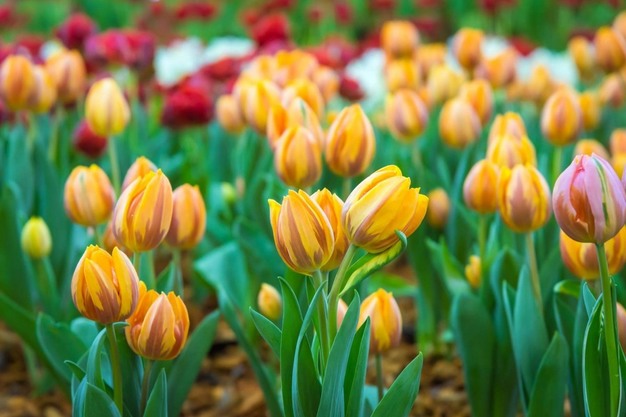
Tulips are among the most eye catching flowers seen in florists during February. They are increasingly associated with Valentine's Day, yet unlike roses or lilies, tulip production is strongly conditioned by climate.
 © Universidad de Guadalajara
Traditionally, tulips are grown in countries with well defined cold winters, such as the Netherlands, where environmental conditions allow for natural, large scale production.
Where tulips are grown in Mexico
In Mexico, there are regions where tulip production has been developed, with Atlixco in Puebla and the boroughs of Xochimilco and Milpa Alta in Mexico City standing out in terms of production volume.
In these areas, growers have managed to establish tulip production under very specific systems, for example through the use of bulbs imported from Europe. For the bulbs to develop and produce flowers, careful planning is required, along with temperature management and strict control of growing cycles to ensure flowering coincides with periods of highest demand.
This case illustrates how climate can determine which flowers can be produced in a given country or region, as well as the level of technology, investment and management required. More than simply producing tulips, Mexican growers have learned to adapt them to conditions that are not entirely natural for these plants in the country.
Adaptation, innovation and training for the future
Faced with a constantly changing landscape, floriculture in Mexico has begun to transform. The use of greenhouses, irrigation technification, integrated pest management and the selection of more resilient varieties are among the strategies enabling the sector to face climate challenges while maintaining competitiveness.
These challenges highlight the need to train professionals with a comprehensive understanding of agriculture. Today, knowing how to produce is no longer enough, it is essential to understand climate, natural resources, sustainability and markets.
In this context, professional profiles such as the Agro Business Engineering degree offered by the Universidad Autónoma de Guadalajara (UAG), which integrates agricultural production, management and sustainability, are key to meeting the sector's new demands.
When giving flowers also means recognizing the field
Behind every flower given on February 14 there is far more than a symbolic gesture. There is field work, technical decision making, climate adaptation and applied knowledge. Valuing the flowers we receive also means recognising the effort of those who produce them and the importance of preparing to face an increasingly changing environment. Because caring for the climate and strengthening training in agriculture is, in many ways, how we ensure flowers can continue to bloom for us.
Source: www.uag.mx