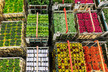


On 26 January 2026, the Primorsky branch of the Federal Centre for Animal and Plant Health Safety confirmed the presence of western flower thrips (Frankliniella occidentalis) in fresh-cut flowers imported from China. Two consignments totaling 165,900 stems were inspected at the Pogranichny phytosanitary control post. Laboratory tests identified the quarantine pest in 12,700 stems of green and spray carnations, gypsophila, delphinium, and chrysanthemums. The import of the affected flowers was banned, and the contaminated part of the shipment was destroyed. Since the beginning of 2026, the pest has been detected 15 times in flower imports from China, affecting 74,900 stems.
In Altai Krai, more than 40,200 stems of fresh-cut decorative greenery were denied entry in January due to invalid phytosanitary certificates, incorrect labeling, and discrepancies in documentation. The shipments were returned to the exporters.
From 1 to 6 February, around 300,000 locally grown tulips were shipped from the Kaliningrad region to Moscow and the Moscow region. Laboratory testing confirmed the absence of quarantine organisms, and three phytosanitary certificates were issued.
On 5 February, inspectors carried out phytosanitary checks at a greenhouse in the Ulyanovsk region ahead of International Women's Day. The facility has produced 3,000 tulips so far, with 170,000 tulips and 2,000 roses currently growing. Samples were sent for laboratory testing, and the flowers will be released subject to negative results.
Also on 5 February, 31,900 stems of fresh cut flowers from China were inspected at the Nizhneleninskoye border crossing in the Jewish Autonomous Region. The shipment included roses, carnations, chrysanthemums, tulips, lilies, hydrangeas, and decorative greenery. Laboratory analysis confirmed compliance with Russian phytosanitary requirements.
Since the beginning of the year, 53,900 stems have been imported into the region via this crossing, compared with just 13,300 stems in a single shipment last year.
Source: fsvps.gov.ru