


As Valentine's Day approaches one of the most important moments of the year for the flower industry, Flowers of Colombia will once again arrive on time to accompany this celebration in the United States and around the world, despite the operational and economic challenges facing the sector.
 © Asocolflores
Valentine's Day represents a critical season for Colombian floriculture. Between January and February 2025, Colombia exported close to 65,000 tons of fresh cut flowers, equivalent to 15–18 percent of its annual export volume. The United States remains the industry´s primary destination, accounting for approximately 80 percent of total export value during this season, consolidating its role as Colombia's strategic partner in the global flower market.
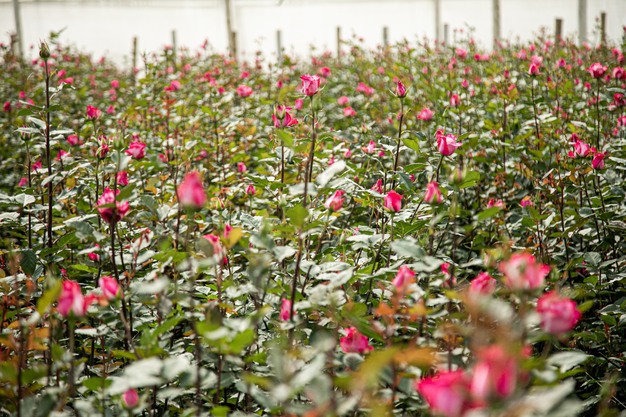
Roses continue to be the leading product for Valentine's Day, representing nearly 30 percent of Colombia's total cultivated flower area, with more than 10,500 hectares nationwide. While growers have observed a gradual interest in alternative colors and varieties, red roses remain by far the most demanded flower for this celebration, maintaining their symbolic association with love and romance.
 © Asocolflores
Colombia's climate conditions provide an ideal environment for year-round production of fresh cut flowers. Quality is ensured from the earliest stages of cultivation through precise irrigation management, balanced fertilization, rigorous pruning protocols, and strict phytosanitary controls. Although some production areas in Colombia experienced lower temperatures, no extreme weather events were reported that could compromise production during this season.
Delivering flowers on time for Valentine's Day requires a highly synchronized logistics operation. Approximately 92 percent of Colombian flower exports are transported by air, with the remaining 8 percent shipped by sea. Maintaining a continuous cold chain between 2°C and 4°C is essential to preserve freshness and vase life. During peak seasons, like Valentine's Day, when export volumes surge, precise coordination is critical to avoid congestion at airports, ports and ground transport routes.
 © Asocolflores
This level of reliability is made possible through Plan Pétalo, a public–private coordination strategy led since 2006 by Asocolflores, Association of Colombian Flowers Exporters. Now marking its 20th anniversary, Plan Pétalo aligns growers, logistics operators, airlines, ports and regulatory authorities to ensure secure, efficient and traceable export operations. The model strengthens risk mitigation across the supply chain and provides operational predictability during high-demand seasons such as Valentine's Day. Between January and February 2025, Colombia exported nearly 60,000 tons of flowers by air in more than 1,400 flights and over 5,000 tons by sea through four major ports, reinforcing its reputation as a reliable global supplier.
Beyond its trade performance, Valentine's Day highlights the broader economic and social impact of Colombian floriculture. The sector generates more than 240,000 formal jobs nationwide and creates over 20,000 additional temporary formal positions during peak seasons, primarily in cultivation, post-harvest and logistics operations. Each export season represents not only commercial activity but also rural employment, income stability and development in flower-growing regions.
Although the sector's priority remains ensuring that Colombian flowers reach international markets on time, Colombian flower growers have faced significant economic pressures in recent months. Increased tariffs, minimum wage adjustments, and currency depreciation have posed important challenges during this key celebration season. Colombian flower growers have undertaken a comprehensive review of their structures, optimizing operational processes, improving productivity, and implementing efficiency measures across their value chain to meet seasonal demands while maintaining competitiveness. While the challenges are significant and require difficult adjustments, we are confident that they will ultimately become opportunities to strengthen Colombian floriculture with the highest quality standards, while upholding the social and environmental sustainability principles that have long distinguished our industry.
For more information: Asocolflores
www.asocolflores.org