


As Valentine's Day approaches, the race is on for florists nationwide to keep their bouquets of flowers looking fresh in their stores and blooming long after they're purchased.
Standing in the way of victory is ethylene, a naturally occurring plant hormone that speeds aging and shortens vase life. Helping challenge its effects is Rasika Dias, distinguished research professor and chair of the Department of Chemistry and Biochemistry at The University of Texas at Arlington, who is leading research to slow the aging process in both cut flowers and produce.
"Ethylene is a gas, and because it's a gas, it spreads everywhere, which makes it hard to control," Dr. Dias said. "It's not like a powder you can just blow off. Ethylene plays a vital role in nature, from fruit ripening to leaf drop to seed germination. For instance, fruits such as bananas, avocados and pears ripen because of ethylene. This ripening process transforms starch into sugars, which explains why ripe fruit tastes sweet."
The same science that could help cut flowers last longer could also keep everyday fruits and vegetables—such as apples, avocados and broccoli—fresher for longer, helping reduce food waste.
Currently, the chemical 1-MCP is an option used to counteract ethylene's effects on cut flowers and some fruits and vegetables. With support from the American Floral Endowment and the U.S. Department of Agriculture, Dias and his team are now testing new non-toxic and easier-to-use compounds that may be more effective than 1-MCP.
 © Adobe Stock
"Arguably the most important application is reducing food waste," Dias said. "Fruits and vegetables are thrown away when they over-ripen—bananas turn brown, tomatoes become too soft and people won't buy them. This is a major issue during shipping, since most food travels long distances. Without treatment, much of it deteriorates before reaching stores. That's a huge economic and food-security problem."
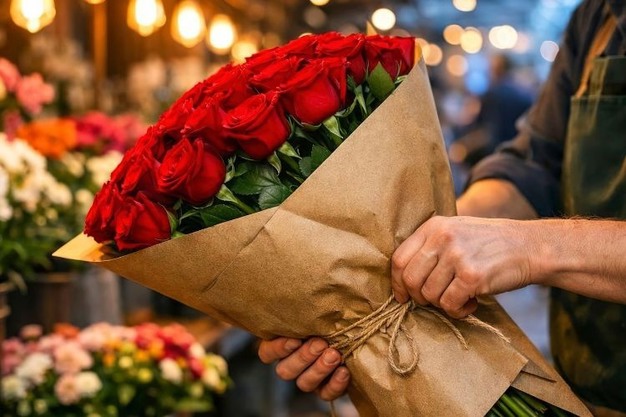
But this time of year, the research has a particularly timely focus: helping florists keep their bouquets of red roses looking vibrant and lasting well beyond Valentines' Day.
To conduct their studies, the research team takes roughly 30 freshly cut flowers and divides them into three groups—untreated, treated with existing commercial products and treated with new compounds developed by Dias and his team.
Dias' team has tested several formulations, with two compounds in particular showing promise.
"You monitor how long each group lasts—how fast petals drop, how quickly they wilt," Dias said. "If the treated flowers last significantly longer than the untreated ones, that compound shows promise."
Source: UTA