


In the Netherlands, Valentine's Day marks one of the most important sales peaks of the year at the flower auctions. Auctioneer Erik Wassenaar reflects on the Valentine's trading period, discussing price developments, standout products and how this season differed from the previous year.
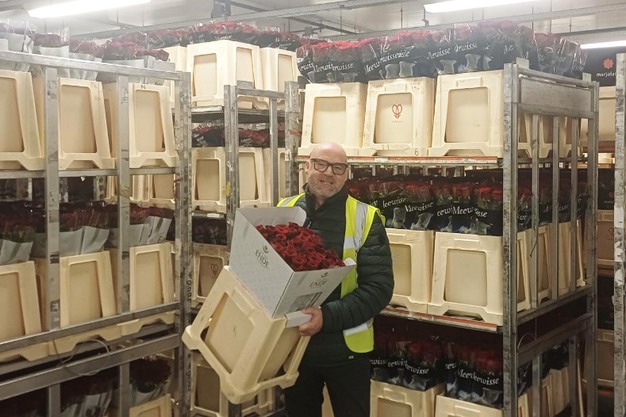 © RFH
© RFH
"The weeks leading up to Valentine's Day are always exciting. A significant share of annual turnover is generated in this short period. For growers, buyers and us as auctioneers, it is a rewarding time. For some it remains tense, and for others it is mainly a stressful period.
Higher bidding and quick switching
Prices can rise sharply or behave unpredictably. To achieve the best possible market price, I often set a higher opening price on the auction clock during this period. Auctioning in 'rounds' becomes almost standard practice. We also switch more frequently between currency codes.
This rapid switching can sometimes be confusing: first trading in cents, then in rounds, followed by another currency code. It all happens in a split second. That is why it is important for us as auctioneers to communicate clearly. If someone makes a mistake, we resolve it properly.
Valentine's Day less stressful than last year
The market was noticeably calmer this year. Volumes were slightly higher than a year earlier, but more importantly, there was less tension among buyers. Orders could be fulfilled well in advance, which reduced purchasing pressure.
The previous year was very different. A short cold spell in Kenya and Ethiopia delayed rose production. Tulips were also much scarcer at that time. This created considerable uncertainty among buyers about whether they would have sufficient product to meet their orders, resulting in higher pressure and rising prices. With less purchasing stress this season, there was less pressure on the market and less tension on the clock.
As every year, red was by far the most popular colour. Roses performed particularly well, but other products such as tulips, lisianthus, gerberas and chrysanthemums also remained favourites for the occasion. In the plants segment, Valentine-themed products were in demand, including heart-shaped packaging and plants presented in heart shapes.
Flowers complete Valentine's Day
Valentine's Day is not only significant for flowers and plants. Other sectors, such as chocolate and perfume, also invest heavily in campaigns and promotions during this period, encouraging consumers to choose their products as gifts.
That is precisely why it is important for the floriculture sector to continue promoting flowers and plants in a positive way. We all have a role to play in that.
"A Valentine's Day without flowers? That is not an option for me. I would say: spread the word. Valentine's Day is only complete with beautiful flowers."
Following the Valentine's sales peak, the sector shifts its focus to International Women's Day, another key moment on the floriculture calendar.
For more information:
Royal FloraHolland
https://www.royalfloraholland.com/