

Efforts to develop ornamental and biopharmaceutical plants are deemed in need of breeding innovation support capable of increasing genetic diversity while enhancing utility value. Induced mutation has become a strategic approach to producing superior varieties that possess both aesthetic value and health benefits.
This was conveyed by Prof Syarifah Iis Aisyah during the IPB University Professor's Scientific Oration (2/14). She emphasized the importance of science-based innovation to support industry and public health.
"My scientific specialization is induced mutation breeding in ornamental plants. Currently, ornamental plants are used not only for decoration but also for the biopharmaceutical compounds within them, which are beneficial for health and cosmetics," she stated.
She cited examples such as marigolds (Tagetes spp.), which contain lutein and zeaxanthin for eye and skin health, torbangun (Coleus amboinicus), which can improve the quality of breast milk (ASI), and purslane (Portulaca oleracea), which is rich in antioxidants and utilized in the cosmetic industry.
 © IPB University
The IPB University Professor of Ornamental and Herbal Plant Mutation Breeding explained that natural mutations occur very rarely, therefore, induced mutations using physical mutagens such as gamma rays and X-rays, or chemical mutagens such as ethyl methane sulfonate (EMS) and colchicine, are required.
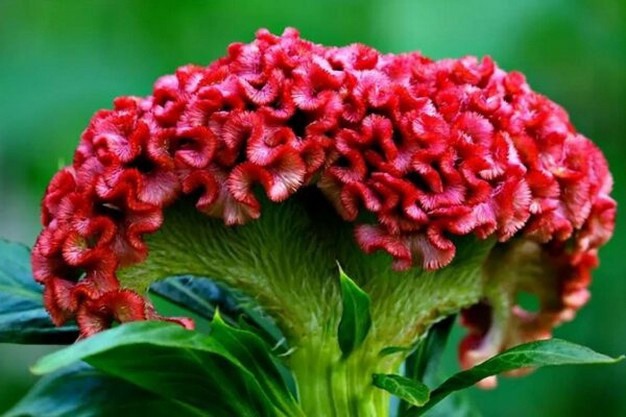
"In cockscomb plants (Celosia argentea), an EMS treatment of 0,5–4 percent can increase phenolic and flavonoid content. Meanwhile, in purslane, the use of 0,1 percent colchicine can increase total phenolic content and antioxidant activity by up to 3,56 times. These antioxidants are beneficial for both the treatment and prevention of cancer," she explained.
She added that the induced mutation method is relatively more affordable compared to biotechnology and does not depend on the availability of male and female parents as in hybridization. However, its implementation must follow strict safety standards.
"Induced mutation through physical and chemical mutagens has proven effective in creating new genetic diversity in tropical ornamental plants. This approach is important as a strategic tool to expand genetic variation, accelerate selection, and improve desired traits," she remarked.
Expert potential
She also highlighted the economic potential of ornamental plants. Indonesia ranked fourth globally as an exporter of ornamental plants in 2024. The demand for marigolds in Bali reaches approximately eight tons per day, with an economic value of around IDR 200 billion per year.
"This approach serves as a strategic step for the advancement of ornamental and biopharmaceutical plant breeding programs," she added.
Source: IPB University