

Florensis Kenya is part of the international Florensis family, supplying young plants and cuttings to professional growers in Europe. From its production site in Naivasha, north of Nairobi, cuttings of perennial plants are produced on approximately 14 hectares. The operation is supported by more than 400 employees and focused on quality and meeting strict export standards.
Automated monitoring as a foundation
The collaboration between Florensis and PATS started in 2021. That same year, Florensis Kenya introduced automated pest monitoring in its cutting production.
Florensis Kenya was the first company in East Africa to use PATS-C for monitoring the Duponchelia moth. The system was installed in compartments where this pest posed a risk, and the local IPM team actively works with the data in daily operations.
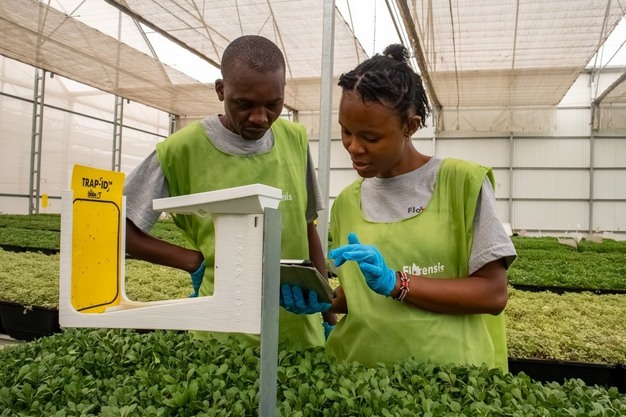 © PATSTwo members of the CPM team review pest development data next to a Trap-Eye sensor.
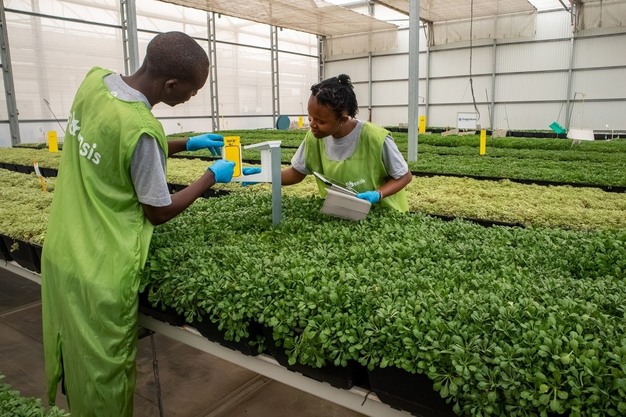
Since 2021, PATS-C has been used to monitor Duponchelia activity. In 2024, Florensis Kenya expanded its monitoring approach with Trap-Eye, adding automated monitoring for pests such as whitefly and thrips. Trap-Eye enables monitoring at fixed intervals, with high accuracy and minimal labor, creating a standardized way to track pest pressure across the site. Trap-Eye is developed in collaboration with Biobest.
Zero tolerance requires clear insight
In cutting production, mother plants form the basis for all further propagation. Any pest pressure can directly affect quality and export readiness. Florensis applies a strict zero-tolerance approach. Cuttings must be clean before shipment to Europe, making reliable and consistent insight into pest pressure essential.
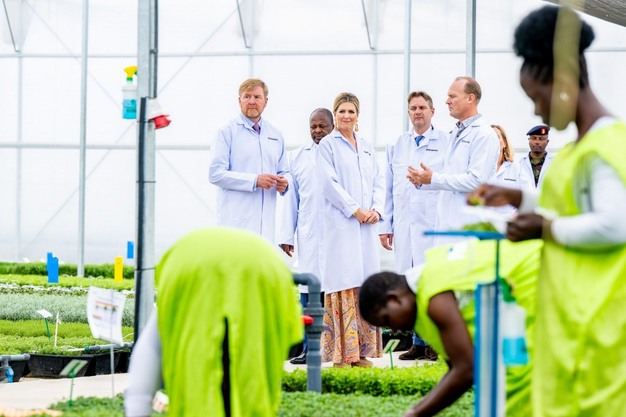 © PATSKing Willem-Alexander and Queen Máxima visit the Florensis Kenya location, where they were shown the production facilities during their official tour in 2025
"Innovation meets sustainability at Florensis Kenya. We are replacing manual scouting with a data-driven CPM approach, making our teams more effective by focusing on proactive solutions instead of counting insects. We are proud to show the world that Kenya is at the forefront of the global transition toward tech-forward, sustainable agriculture," said Eddy Verbeek, General Manager.
Ready for peak season
The busiest period for Florensis Kenya is leading up to the European spring, when demand increases significantly. During these peak moments, reliable and standardized monitoring is essential to safeguard both quality and delivery reliability.
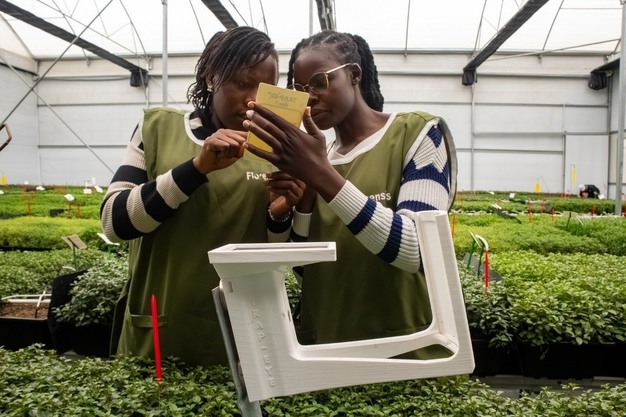 © PATSTwo Florensis employees examine the yellow sticky trap card
The use of PATS-C and Trap-Eye is expanded step by step to compartments where monitoring is required, supporting increasing quality standards and international supply chain demands.
One approach across locations
Florensis works toward a uniform way of collecting pest data across its production locations worldwide. This makes it easier to compare situations, share insights between IPM teams, and maintain oversight from the headquarters in the Netherlands.
 © PATS
In 2025, the PATS team visited the Florensis Kenya location in person, strengthening the collaboration. That same year, King Willem-Alexander and Queen Máxima visited Florensis Kenya, highlighting the role of Dutch horticultural technology in international production.
Moving forward together
The collaboration between PATS and Florensis Kenya has developed into a long-term partnership. With a shared focus on quality, transparency, and continuous improvement, both teams continue to build on automated pest monitoring.
For more information:
PATS Delftechpark 26, 2628 XH, Delft, NL
[email protected]
www.pats-drones.com
Florensis
Email: [email protected]
https://www.florensis.com/en