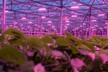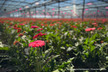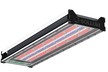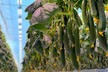


With the shift from seasonal HPS to year-round LED installations, greenhouse lighting has fundamentally changed. Where traditional HPS SON-T systems were removed during the unlit season, modern LED fixtures now remain in the greenhouse 365 days a year. 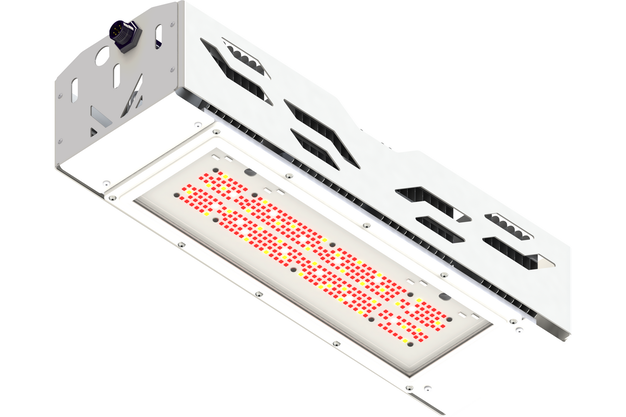 © Mechatronix
According to Koen Vangorp, CEO of MechaTronix, that evolution requires a different design philosophy: "Since LED installations stay in place year-round, we believe grow light manufacturers must focus on minimizing the impact of solar shadow on the crop."
The hidden cost of shadow
The impact of shadow from grow light fixtures, and the resulting loss of solar radiation, is still widely underestimated. "Consider a typical tomato or cucumber greenhouse with four LED fixtures per 8-meter bay. This setup results in approximately 1,000 fixtures per hectare. With fixture dimensions of 100 x 21 x 12 cm, the total structural shadow footprint adds up to roughly 210 m² per hectare."
"That shadow is present year-round, blocking natural sunlight, every micromole, watt, and joule coming from the sun. When translated into production yield and revenue, this is no longer a marginal detail. It directly affects crop performance and profitability."
 © Mechatronix
CoolStack PRO 2026: Designed to reduce solar loss
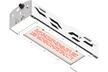
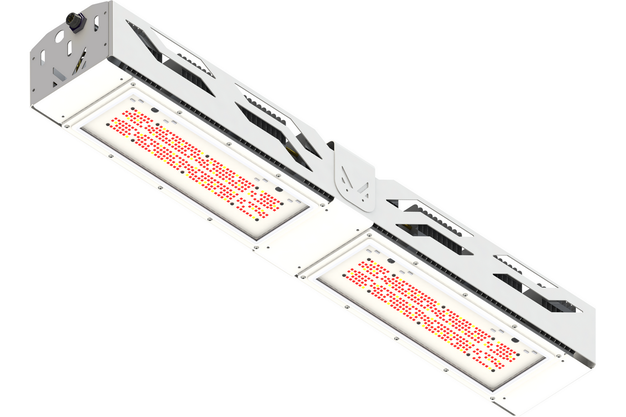
The new CoolStack PRO 2026 series is engineered specifically to reduce shadow-related light losses while maintaining superior thermal performance.
"Thermal management remains the most critical aspect of LED fixture design," says Vangorp. "With our heat pipe and stack-fin technology, we achieve significantly higher cooling performance. That allows us to miniaturize fixtures without compromising output."
Rethinking LED Design
Higher power alone is not the solution. The real innovation lies in designing fixtures that integrate seamlessly into modern LED greenhouses, minimizing structural shading while maximizing both artificial and natural light efficiency.
In today's year-round LED installations, shadow reduction is not a secondary benefit. It is a strategic design priority.
 © Mechatronix
For more information:
MechaTronix
www.horti-growlight.com
[email protected]