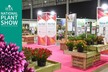


The tenth edition of Myplant recorded new milestones, with significant growth both in terms of attendance and exhibition offering.
According to the organization, the 2026 edition clearly portrayed the economic, industrial and cultural weight of horticulture and its supply chains, gathered at the fair across nine macro exhibition sectors, from seed to research, from design to care and maintenance of plants, flowers and soil, with highly innovative products, equipment, machinery and solutions.
"A vibrant exhibition comparison emerged among the finest plants and most sought-after botanical varieties, the most scenic flowers, the smartest engines, the most innovative landscape projects, the most sustainable solutions, leading players in the green transition, the potential of the best floral design, and the most advanced and effective techniques for the care and management of private, public, sports and hospitality greenery."
"In this context, the extensive conference program that characterized the tenth edition of Myplant outlined the profile of a solid and structured supply chain, fully aware of the environmental, urban and social challenges underway and, at the same time, strongly oriented toward innovation and future development. An integrated system of relationships, skills and visions emerged, capable of fuelling the evolution of the horticultural industry, from gardening to urban regeneration, from sports fields and facilities to new floral trends and the offering of increasingly sustainable products."
Record-breaking numbers
The 2026 edition recorded 800 brands exhibiting across 60,000 sqm (+5,000 sqm), and nearly 28,000 entries (almost 27,000 in 2025).
The largest number of exhibitors came from Lombardy (IT), Veneto (IT), Tuscany (IT) and the Netherlands, well distributed across the nine macro exhibition sectors (pots, nurseries, technology, services, machinery, flowers, decoration, landscape architecture, garden furniture) throughout the four exhibition halls, also including the crowded outdoor areas reserved for workshops and practical demonstrations for tree climbers and lumberjacks.
Over 200 delegations of top international buyers from 47 countries attended. The largest international business delegations came from Saudi Arabia, the United Arab Emirates, Germany, Croatia, Spain, Romania, China, France, the Maghreb and Turkey. Buyers from the Middle East and Central Asia are increasingly important.
More than 300 journalists (10% from abroad) pre-accredited, testifying to international media interest, and more than 130 foreign companies were accredited as visitors.
Among these, the most represented segment was garden centres and specialized retail, with attendees from Austria, the United Arab Emirates, Estonia, Montenegro, Slovenia, Spain, Switzerland and the United Kingdom. This confirms strong attractiveness toward specialized distribution channels and organized networks, including purchasing centres and integrated Home & Garden groups.
This was followed by the DIY / Home Improvement sector, with brands from Bulgaria, Germany, Lithuania, the United Kingdom and Switzerland, demonstrating the interest of major chains and international holdings in the garden and home improvement segment.
Significant was also the presence of the Landscape and green design sector, represented by Canada, Jordan, Saudi Arabia and Turkey, a sign of growing attention toward design, contracting and development of large projects, especially in high-investment areas such as the Middle East.
The public and institutional sector involved entities from France, Malta, the Principality of Monaco and Portugal, showing administrations' interest in urban greenery, historic garden management and urban sustainability policies.
The picture was completed by large-scale retail (France and Lithuania), plant and flower trade and distribution (Russian Federation, Luxembourg, Netherlands), forest nursery production (Czech Republic), horticultural machinery (Australia), real estate development (Saudi Arabia) and trade associations (primarily Germany and Luxembourg).
Overall, a structured ecosystem emerged covering the entire supply chain, from nursery production to machinery, from specialized distribution to large-scale retail, up to landscape design, real estate and public management. A cross-sector presence highlighted both the weight of European retail and the growing centrality of major international projects linked to urban and landscape development.
A very strong signal that Myplant sent to markets ahead of the second edition of Myplant & Garden Middle East, to be held at the Dubai Exhibition Centre (21–23 October 2026). Myplant Middle East, organized in concert with IEG Middle East and strongly promoted by the Myplant Consortium, is the only exhibition dedicated to the ornamental green supply chains in the Middle East, a market with enormous potential seeking proposals, products and solutions from Italy and Europe, as demonstrated in the first edition.
Markets, new record for Made in Italy exports and international challenges
The sector gathered at Myplant backed by record figures. The value of national production exceeded €3.25 billion in 2024, with growth of 3.5% over the previous year and over 30% compared to 2014, despite climate and market tensions, while exports exceeded €1.2 billion with a positive trade balance of €374 million.
Moreover, overseas sales of Italian plants and flowers exceeded the record figure of €1.3 billion in 2025, a historic result that must strengthen the commitment to promoting the principle of reciprocity and removing the many phytosanitary barriers that sometimes conceal protectionist logic preventing Italian horticulture from accessing various markets.
During debates, the need emerged to strengthen protection of European products with stricter controls on materials from third countries and to revise European packaging legislation, recognizing pots as production tools rather than packaging.
Internationally, the value of global production of flowers and potted plants in 2024 was estimated at €24.5 billion, to which €29 billion for nursery production and €101 million for bulb production must be added (CREA on AIPH data).
According to Eurostat, the horticulture sector in the European Union reached a production value of €24.5 billion in 2024.
A great showcase of new products
Myplant was an exhibition rich in novelties and curiosities in every display area, a concentration of innovative proposals ready to chart the future course of the entire sector. This was well represented by MY Innovation, a route through the halls, marked on a map, identifying green solutions and the most innovative technologies presented by exhibitors, guiding visitors to discover the excellences reshaping the future of greenery in an efficient and sustainable way.
For the tenth edition, 35 companies were selected across 12 sectors.
From circular economy to aquaponics, from water and energy saving to robotics, mechanics, photovoltaics and AI sensor technology, from eco-friendly substrates and fertilizers to digitalization, soil mapping, monitoring and lighting systems, and vertical farming, these were some of the proposals presented at the fair.
Myplant recorded a real boom in the machinery sector, which doubled its exhibition space and is increasingly central to the technological evolution of the sector. In this regard, the opening of the new Engines and Spare Parts section was announced, with a preview sponsored by a world-class brand.
The fair presented a wide and diversified range of plant varieties, new botanical proposals in terms of shape, color and adaptability to environments and climates. The offering included indoor and outdoor decorative plants, rare botanical varieties, succulents and seasonal novelties, reflecting the dynamism and innovation of the horticultural sector.
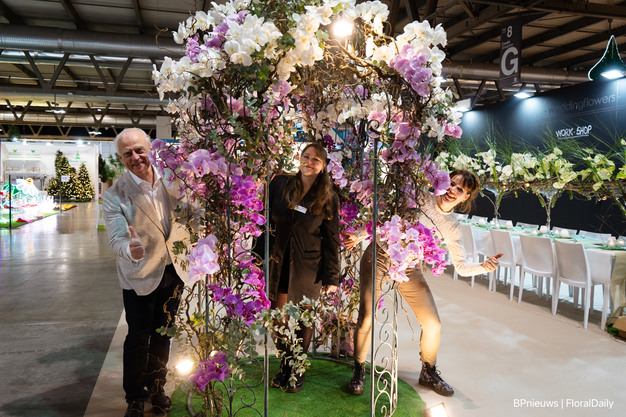 © Mirthe Walpot | FloralDaily.com
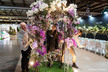
From surprising living-room algae, new protagonists of indoor greenery, to macro bonsai capable of transforming into true living sculptures, to imperial and multi-coloured succulents with strong scenic impact, the displays showed strong creative energy. Space was also dedicated to roses, timeless queens, alongside multi-coloured and multi-flavour aromatic plants designed to combine aesthetics and functionality in the garden and kitchen.
Great attention was paid to melliferous plants, increasingly requested to promote biodiversity, alongside cyclamens renewed in shapes and shades. There were also offerings such as citrus trees in hundreds of particular varieties and orchid species, up to imposing centuries-old olive trees, authentic plant monuments with timeless charm, and palms from warm climates.
Noteworthy was the offering of trendy houseplants, with a strong presence of Ficus, Alocasia in dozens of varieties, Calathea and Maranta in numerous varieties and sizes, from mini-plants ideal for small spaces to extra-large versions suitable for lofts and modern interiors.
Philodendrons confirmed their appeal, with varieties such as Monstera 'Thai Constellation' and other highly appreciated variegated selections. Surprising varieties emerged such as Zamioculcas 'Zorro' with black leaves and the incredible Labisia 'Kura Kura', unlike any other houseplant.
Among shrubs and outdoor ornamental plants, interesting specimens of ornamental citrus such as Citrus canaliculata, tree camellias in full bloom and scenic macro bonsai stood out.
The seasonal herbaceous section presented various novelties, with pastel or variegated primroses, new freesias, new varieties of osteospermum and distinctive Proteaceae, offering fresh inspiration for gardens and floral compositions.
Numerous innovative solutions for plant care and nutrition were presented at the fair, under the banner of sustainability and efficiency. These included natural pest control products that protect crops without environmental impact, endotherapy systems allowing targeted treatments directly into the trunk while avoiding chemical dispersion, and next generation bio stimulants capable of improving growth, root systems and resistance to climate stress while reducing fertilizer use.
Great attention was also paid to soil regeneration, with formulations based on biochar and vermicompost that increase fertility, water retention and microbial activity, promoting productivity and crop quality. The picture is completed by precise nutrient dosing solutions designed to simplify application, limit waste and ensure consistent and sustainable results.
Greenery, wellbeing, health and inclusiveness
The horticultural sector represents a resource of significant economic importance, but also contributes substantially to social wellbeing thanks to the positive effects of green areas on health and quality of life. This connection was clearly highlighted during conferences attended by scientists, researchers, journalists and authoritative representatives of local, regional, national and international institutions. The theme played a central role in debates, involving areas such as sport, urban planning, biodiversity and certifications.
Every euro allocated to public greenery gains value over time thanks to the multiple ecosystem benefits it generates. Greenery, as a fundamental design element, represents a defence against climate change, a barrier against pollution, a stimulus for inclusion and social safety, and plays a key role in environmental protection, territorial resilience, hydrogeological safeguarding and biodiversity conservation. These advantages generate both direct and indirect, tangible and intangible economic impacts, as clearly demonstrated at the fair and highlighted by the national award "La Città per il Verde" (26th edition), the only national recognition aimed at municipal administrations, public bodies, private entities with public purposes and volunteer associations that have distinguished themselves in the creation, enhancement, maintenance and redevelopment of green areas.
Added to this was the launch of the call for the high social-impact creative design competition "I Giardini di Myplant" (7th edition), dedicated to the redevelopment of a green and therapeutic space at the headquarters of the CAF Association of Milan, which welcomes children and young people who are victims of abuse and severe family mistreatment.
The importance of landscape architecture in sustainable urban and territorial redevelopment processes was reiterated during meetings in the special MY Landscape area, coordinated by Sabina Antonini, En Scape network. Prominent international landscape design figures, companies and professionals addressed topics such as biodiversity and urban regeneration, urban lighting, new urban models, innovation in materials and digitalization of design processes.
Conferences
At the center of the debate was greenery as a living and strategic infrastructure for cities and territories, capable of generating wealth, beauty and social wellbeing, spanning public and private management, design, sport, research, innovation and new generations.
The meeting calendar ranged from Coldiretti to David Chipperfield Architects, from the Polytechnic University of Milan to Green City Italia, from the CREA Institute to the Universities of Florence, Bologna and Bari, from Eurac to AIAPP, from CIA – Italian Farmers to Conaf, to Confartigianato, ASSO.IM.PRE.DI.A, Lombardini22, AIPV, SIA, Assofloro, CNR and many others among sector associations, research centers, international design studios, experts, professional bodies and Public Administrations.
Noteworthy were the events on sports turf, covering football, athletics and golf, with contributions from AITG, the Italian Golf Federation, Federcalcio Servizi, LND Impianti, Lega Serie B, Lega Pro, Como 1907, Venezia FC, Albinoleffe, CONI, FIDAL and the Technical Center of Coverciano (Casa Azzurri).
Events
An international benchmark for trends in floral decorative design, the special MY Decor area, coordinated by Marco Introini and Rudy Casati, attracted thousands of operators with a packed schedule of demonstrations, talks, composition contests and fashion shows curated by Aya Vloet.
Surrounding it was an atmosphere of great charm, color and elegance, marked by high-impact installations, from ColorTrend by Marilena Calbini and Vincenzo Antonuccio to Officina delle Piante by Annette Gottmann, from the set created by L'Ecole des Fleurs to the Weddingflowers area curated by Charles Lansdorp, to the Green Boulevard, the over-100-meter green avenue proposing sustainable urban landscape types through five scenic settings.
Alongside was the special My Landscape area, rich in architectural installations and design proposals, including the Project Gallery exhibition featuring contributions from leading design firms.
Among the most anticipated events was Garden Center New Trend, curated by Erica Cherubini and Ed. Laboratorio Verde, celebrating ten years of visions, scenography and products that have marked the evolution of the format and influenced the garden retail market.
The special MY Green Sports area, developed in collaboration with some of the most important institutional players in the sector and in partnership with Kulture Multimedia, hosted a schedule of meetings with leaders of many leagues, associations and sports federations in a highly recognizable and attractive setting.
Comment by Valeria Randazzo, Exhibition Manager of Myplant
"Myplant grows because it is built together. It originates from companies, trade associations, representatives, partners, publishing houses.
It is a community. Indeed, it is a big family. It is our great 'home.'
Walking through the halls we greet each other, sometimes even just with a glance. We recognize each other. We respect each other.
Because this 'home' we built together, with effort, perseverance, investments, mutual trust. Brick by brick.
Without this great family, without the strength of this community, nothing would have been possible.
This tenth edition is an enormous, deep and sincere thank you to those who, even today, continue to add bricks and help this splendid building grow."
Overall, Myplant & Garden 2026 presented the image of a mature, solid and internationalization-oriented sector, capable of combining production tradition and technological innovation. Record production and export figures, together with growing openness to new markets and a strong push toward sustainability, indicate that horticulture is not only an agricultural excellence but a structured economic system, playing an increasingly significant role in contemporary market, industrial and urban dynamics.
You can view our photo report from Myplant & Garden at the link here.
For more information:
Myplant & Garden
[email protected]
myplantgarden.com