


In large scale ornamental production, genetics decide margin. Compactness, timing and labour efficiency are not preferences. They are operational necessities.
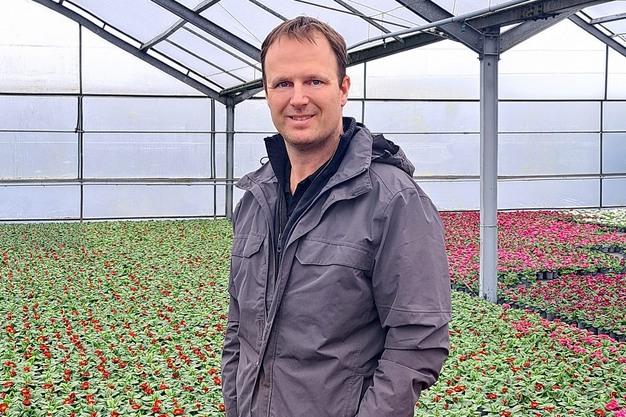
At his horticultural company in Germany, Michael Hommes produces under five hectares of foil and glasshouses and six hectares outdoors. Supplying food retail, DIY chains and specialist garden centres means every crop must be predictable. Every variety must justify its space.
"We therefore chose the compact alternative."
That compact alternative became Primula acaulis Paradiso.
Compactness as strategy
Around ten years ago, Hommes faced increasing pressure to maintain compact crops. When Tilt disappeared from the market, control became more difficult. "Without Tilt it is difficult to control," he says. "That is why we moved more and more towards Paradiso."
The decision was performance driven. Primula acaulis Paradiso delivered natural compact growth. It required less intervention and reduced dependency on growth regulators. For a commercial grower, that is not a small advantage. It stabilises planning. It lowers labour input during peak weeks. It reduces risk.
At Hommes' company, compactness is not visual detail. It is production security.
 © Schoneveld Breeding
Dialogue that improves performance
Genetics alone are not enough. What strengthens confidence in Primula Paradiso is the structured Growing Support from Schoneveld Breeding. Performance is reviewed once or twice per season under real commercial conditions. Challenges are discussed openly. Improvements are defined clearly.
"We can discuss the problems that are there. And we can clearly indicate what needs to be improved or adjusted."
Breeding goals are linked directly to practical experience. Feedback from Hommes' production flows back into development. "It is important that you can speak openly about breeding goals and improvements," he says. "That exchange makes a difference." Continuous refinement builds long term confidence.
A structural role
Hommes evaluates Primula acaulis Paradiso under commercial pressure. He is open about optimisation points but also clear about progress. "Otherwise, I find Paradiso quite solid across the board," he says.
For his company, the combination of compact genetics and ongoing breeding development makes the difference.
"Yes, we will continue with it."
In a retail driven market where timing and labour efficiency determine results, Primula acaulis Paradiso is no longer an alternative. It is a structural pillar in Hommes' programme.
Schoneveld Breeding
Sluinerweg 15

7384 SC Wilp
Tel: +31 (0)571 27 17 17
www.schoneveld-breeding.com