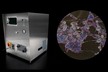


A pilot project in the fields of Lanzarote, developed by Grupo Chacon in collaboration with IES Teguise, is evaluating a device that condenses moisture from the air to produce water for irrigation. The initiative responds to the limited water availability in certain parts of the island, where agricultural supply is unpredictable and the reclaimed water network does not cover all needs.
The device, installed in the school garden at IES Teguise within the Agroindustrial Complex, operates as a dehumidifier: it draws in air, cools it and condenses the water. Currently, the unit generates around 100 liters of water per day, though higher-capacity models exist. Results in the crops have shown promising potential.
The initiative, known as Cuarto de Aperos 2.0, was driven by consulting firm Taboire and is sponsored by Grupo Chacon. Frisolutions handled the technical development, installation and maintenance, while Suntelco conducted a study for connecting photovoltaic energy. Agricultural monitoring has been managed by IES Teguise, which has a background in agricultural training.
 © Damir Đuhera | Dreamstime
According to Carlos Armas, veterinarian and project promoter, "we are looking for innovative solutions to adapt technology to the fields of Lanzarote." The water produced is of higher quality than that from the general supply network, with a pH of 6.5 compared to the network's pH of above 8, making it particularly suitable for phytosanitary treatments.
Teno Osorio, agricultural technical engineer at IES Teguise, explained that "the electrical conductivity of the generated water is six times lower than that of the network," which reduces salt buildup in the soil. The system also incorporates sensors to monitor temperature and relative humidity, along with an app to track device performance.
Osorio adds that "a major advantage is that the device produces water every day, which allows it to be stored for use whenever needed," highlighting its value in remote locations where grid supply is unreliable.
Armas points to the possibility of blending the produced water with grid water to reduce salinity, contributing to the "water autonomy and sovereignty" of isolated farms. The project is assessing how this method complements desalination without negative effects, and is considering a future larger-scale rollout incorporating technologies such as solar panels to meet the system's energy needs.
Source: www.diariodelanzarote.com