

Water quality plays an increasingly important role in modern greenhouse horticulture. Not only because of stricter laws and regulations regarding discharges, but also because clean water directly contributes to a stable and healthy cultivation process. At the pot and bedding plant nursery Van Leeuwen Westland, this led to a project in which, together with installer Haket and the Van der Ende Group, a future-proof solution for cleaning drain water was sought.
Family business with a focus on quality
Van Leeuwen Westland is a family-owned business in Westland that was founded in 1977. The company has since developed into a specialized pot and bedding plant nursery with approximately 26 hectares of production area. The company supplies a wide range of seasonal plants to European retailers on a contract basis.
Over the years, the production area has been gradually modernized, with the aim of continuing to produce efficiently and sustainably in the future. Water plays a central role in this. The greenhouse uses a 240 m³/hour ebb-and-flow irrigation system and a sprinkler system of approximately 35 m³/hour, with most of the water being collected and reused after use.
During peak periods, the water flow can be substantial. In the summer months, approximately 1,800 m³ of water is pumped daily across about half of the area using the ebb-and-flow system. Only a small portion is actually absorbed by the plants; the majority returns to the system as drainage water.
 © Van der Ende Groep
Reason: Outdated UV Disinfection
The reason for the project was the existing disinfection system. This consisted of an inline UV system rated at 240 m³/hour that began to function less reliably over time.
"That naturally makes the grower a bit nervous," says installer Ronald Haket. "The question then becomes: what is the smart next step? Do you reinvest in UV, or do you opt for a different technology?"
Together with Van Leeuwen, various options were explored. That process, from the initial meeting to completion, ultimately took over two years. Initially, UV disinfection was reconsidered, but during the process, ultrafiltration also emerged as an alternative.
Developing the plan together
The final plan was developed through close collaboration between the grower, the installer, and the supplier. According to Haket, it was important to carefully navigate the process.
"We sat down together several times to see what was technically possible and what best suited the company. This wasn't just about the installation itself, but also about operational costs and reliability."
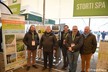
A visit to the Van der Ende Group also played a role in the decision-making process. There, Van Leeuwen received an explanation of the technology behind the Kathari system.
"As an installer, you always try to create a positive impression of what you're proposing," says Ronald Haket. "It helps if you can actually demonstrate the technology and the company behind it."
System tailored to the water flows
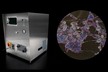
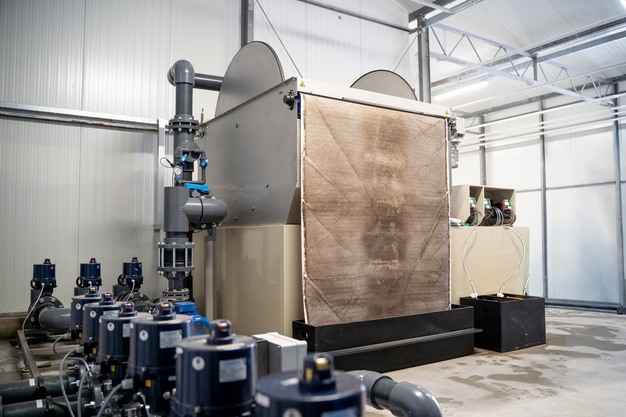
For the final implementation, a Kathari UF-30 was chosen—an ultrafiltration system with a capacity of up to 100 m³ per hour for processing three different influent streams. The system treats all the drainage water before it is returned to the irrigation system. A belt filter was also installed as pre-filtration for the Kathari. This filter removes coarse and suspended contaminants from the water before it reaches the ultrafiltration system, allowing the membranes to function optimally and further increasing the system's reliability.
In addition to the filtration system, Haket also made modifications to the company's water infrastructure. For example, seven additional buffer silos were installed for dirty and clean drain water. Furthermore, a new 240 m³/h water unit with 12 PE manure tanks was installed, and the screening bends for the three water qualities were replaced.
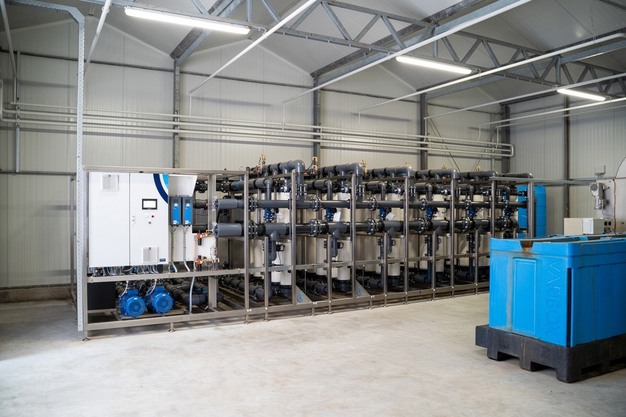 © Van der Ende GroepKathari Ultrafiltration unit
This allows different water streams to be collected and controlled separately, ensuring Van Leeuwen is ready for the future. This separation and buffering create greater stability in the water system and guarantee a consistent water quality for the irrigation system.
Why ultrafiltration was chosen
For Bart van Leeuwen, the degree of filtration was a particularly important factor.
"The filtration provided by ultrafiltration is simply very effective," he explains. "Viruses, bacteria, and fungi are physically removed from the water."
The Kathari system uses ultrafiltration membranes that physically block pathogens and suspended contaminants while allowing water and nutrients to pass through. This enables drainage water to be safely reused without losing valuable nutrients.
"Ultrafiltration isn't just about disinfection; it's primarily about physically removing contaminants from the water," says Ruud Schulte, water specialist at Van der Ende Group. "This keeps not only the water cleaner, but the entire irrigation system as well."
In addition, energy consumption played an important role in the decision-making process.
"If you carefully calculate the operational costs, you see that energy can really make a difference," says Van Leeuwen. "That helps in making a decision."
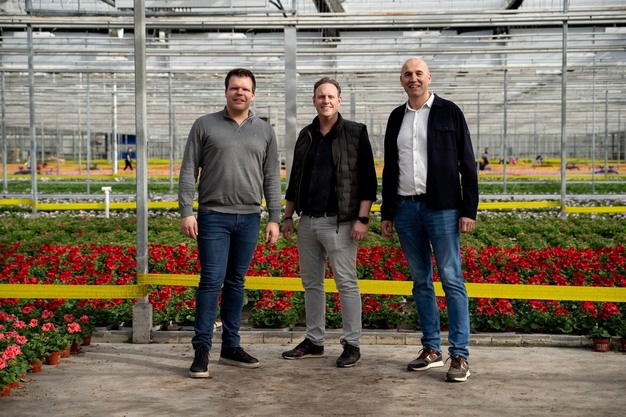 © Van der Ende GroepFrom left to right: Bart van Leeuwen, Ronald Haket, Ruud Schulte
Water management is becoming increasingly important
Within greenhouse horticulture, water management is becoming increasingly strategic. Companies work with multiple water streams, such as rainwater, reservoir water, and drainage water, each of which presents its own challenges. The safe reuse of drainage water therefore requires reliable filtration and disinfection techniques.
Regulations also played a role for Van Leeuwen Westland.
"You're no longer allowed to discharge anything outside, and as a grower, you wouldn't want to anyway," says Van Leeuwen. "But that does mean the water you retain must be of good quality."
Installation and collaboration
The installation of the new system took place in December. During the work, the existing system was replaced, meaning the company was temporarily unable to irrigate.
"Those are always nerve-wracking moments," says Van Leeuwen. "At some point, the saw goes in, and the system has to be up and running again on time." Just to be safe, there was a backup plan via the irrigation system, should that have been necessary.
According to those involved, the collaboration between the parties played a key role in the successful completion of the project.
"You know what to expect from each other," says Van Leeuwen. "That makes working together a lot easier."
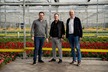
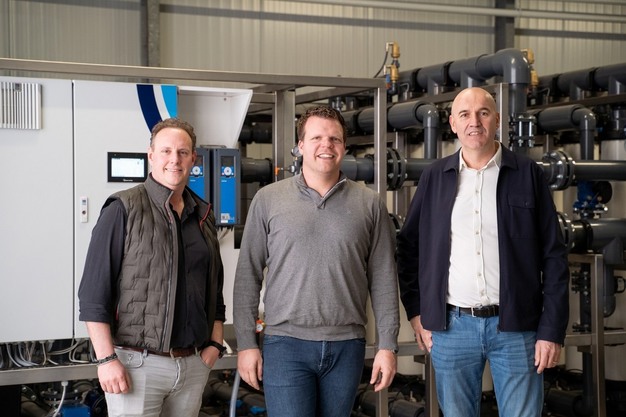 © Van der Ende GroepFrom left to right: Ronald Haket, Bart van Leeuwen, Ruud Schulte
Looking ahead
The installation has now been running for several weeks. The coming period will be used to further monitor the system and optimize it where necessary.
"New technology always needs some fine-tuning," says Van Leeuwen. "But once it's running stably, that brings peace of mind to the system."
With this investment, the nursery is taking the next step in future-proofing water management within the company.
For more information:
Van der Ende Group
[email protected]
https://www.vanderendegroup.nl/