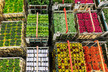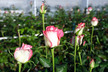


Most flowers sold in Serbia, particularly roses, are still imported, even as domestic production and exports continue to grow. At markets and flower shops in Belgrade, imported roses dominate, typically priced between 120 and 200 dinars per stem (€1.02-€1.70).
Traders confirm that the majority of roses currently available come from the Netherlands, Italy, and Ethiopia, as the local flowering season begins about a month later. Retailers, including flower shops in central districts, rely almost entirely on imported supplies during this period.
Although roses are considered one of the most profitable segments in ornamental horticulture, Serbia's domestic production remains insufficient to meet demand. According to the Serbian Chamber of Commerce, rose exports reached €3.4 million in 2025, up from €2.5 million in 2024. However, imports continue to significantly exceed exports, totaling €7.95 million in 2025 compared to €7.04 million a year earlier.
The imbalance is even more pronounced across the broader category of flowers and ornamental plants. In 2025, exports amounted to €6.7 million, while imports surged to €42.3 million, nearly seven times higher.
The European Union remains Serbia's key trading partner, accounting for 59% of exports and 78% of imports. Main export destinations include the Netherlands, Poland, Croatia, and Germany.
Overall, Serbia's total trade in flowers and ornamental plants reached €49 million in 2025, up from €43 million in 2024. Despite this growth, the market continues to show a strong structural dependence on imports, particularly in the retail segment.
Source: vreme.com