

This article is written by Frans Diedens, who is Ex General Manager of The Giving Tree Nursery Plc., Ex Deputy General Manager of VSF Consulting Plc., Ex Deputy General Manager of Global Energy Plc., and Ex Deputy General Manager of Yalkoneh Flowers Plc.
In international investment circles, Ethiopia has for more than two decades regularly been mentioned as one of the most promising emerging economies on the African continent. With a population of over one hundred million people, a strategic location in the Horn of Africa, and a government actively seeking to attract foreign investment, the country is often presented as an attractive destination for international companies.
During international events, this message is strongly promoted. Foreign companies are invited to explore the economic opportunities of the country, particularly in sectors such as agriculture, horticulture, and agro-industry.
International promotion campaigns can play an important role in attracting new investors. However, in practice, the confidence of potential investors is largely shaped by the experiences of companies already active in the country. For many international entrepreneurs, a simple reality applies: countries that offer existing investors stability, predictability, and respect for contractual agreements automatically create the strongest promotion for new investments.
Between 2005 and 2020, I worked professionally and invested in Ethiopia for fifteen years. During that period, I was able to closely observe how the investment climate evolved. There is no doubt that the country offers significant economic opportunities, but the practical reality for foreign investors often proves to be more complex than official policy documents and promotional campaigns suggest.
As in many rapidly developing economies, various institutional and administrative systems are still in transition. For foreign investors, it is therefore essential not only to consider economic opportunities but also the practical conditions under which projects are developed and managed.
 © Frans Diedens
Economic potential
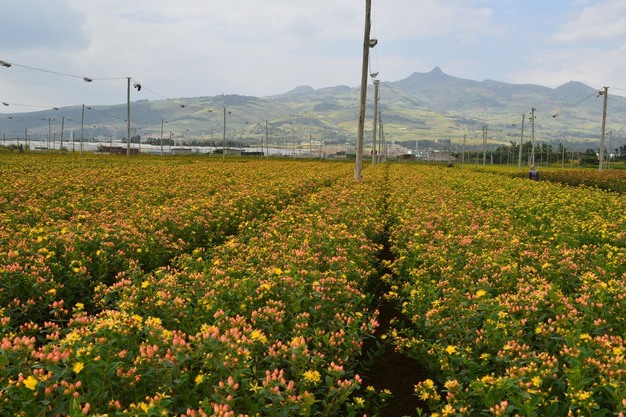
Ethiopia's economic potential is considerable. In recent years, the government has strongly focused on infrastructure development, industrial zones, and the modernization of various sectors of the economy. In sectors such as agriculture, agro-industry, textile production, and infrastructure, real opportunities exist for foreign investors.
In addition, the country has a young and rapidly growing population. For companies, this can be a significant advantage, as labor costs are relatively low and the domestic market has strong long-term growth potential.
The government has also introduced several initiatives to stimulate foreign investment, including industrial parks and fiscal incentives for international companies.
Regulatory stability and legal certainty
At the same time, the experiences of various foreign investors point to several structural challenges within the investment climate. One of the main concerns relates to regulatory stability and the degree of legal certainty.
In practice, regulations can change while projects are already under development. Policy adjustments are often introduced with the intention of economic reform or administrative improvement, but for investors, such changes can create uncertainty, particularly when they affect existing investment conditions.
A clear example is the land use system. In Ethiopia, land cannot be purchased but only leased from the government. This model aims to maintain national control over land use and prevent speculation. In itself, this is not unusual, as similar systems exist in other
However, in practice, obtaining a formal lease contract can be a lengthy process that may take several years. Moreover, various investors indicate that the terms of such contracts are not always fully predictable over the long term.
Where previous rates were around 0.78 Ethiopian birr per square meter per year, new rates proposed in certain regions have increased significantly, reaching levels of up to €2,600 to €21,800 per hectare per year. For large-scale agricultural projects, such price adjustments can have a major impact on the economic viability of investments.
When official rates prove difficult to apply, a negotiation process with regional or local authorities often follows in order to find workable conditions. While such negotiations can sometimes lead to pragmatic solutions, they may also raise questions regarding transparency, predictability, and the potential for corruption within the investment environment.
Administrative procedures and decision-making
In addition to regulatory challenges, administrative decision-making is another key factor for investors. In many cases, foreign companies must work with both federal and regional authorities.
This can lead to complex procedures, with multiple administrative levels involved in permits, licenses, and land allocation. For companies unfamiliar with the local administrative structure, this process can be time-consuming and difficult to navigate.
Many international companies therefore emphasize the importance of experienced local partners and specialized legal support when setting up investment projects.
Security and social context
Beyond administrative and legal factors, the broader social and economic context also plays a role in Ethiopia's investment climate.
For a large part of the population, economic conditions remain extremely challenging. Employment opportunities are limited in many regions, incomes are often low, and food security remains a daily concern for many families. This socio-economic reality forms an important backdrop to economic development.
When economic progress is not evenly distributed, social tensions may arise. In certain regions, this has also affected the security situation surrounding foreign investment projects.
In recent years, there have been reports of incidents in which foreign workers or managers were temporarily kidnapped and later released after negotiations. While such situations are not widespread and are often region-specific, they illustrate that security considerations in some areas can be a real concern for international companies.
For investors, this means that a thorough analysis of regional conditions is essential before starting projects. Security planning, cooperation with local authorities, and strong relationships with surrounding communities are crucial in this regard.
The human reality behind economic statistics
An aspect often overlooked in investment reports is the daily reality of a large part of the Ethiopian population. Despite economic growth figures, many people still live under very difficult conditions.
For many families, daily life remains a constant struggle to secure basic needs such as food, employment, and income. This reality partly explains why economic opportunities, including foreign investment projects, are often viewed with high expectations by local communities.
At the same time, frustration can arise when economic development does not immediately translate into sufficient job creation or improved incomes. For investors, it is therefore particularly important to consider social impact and local engagement in their projects.
In recent years, the strong devaluation of the Ethiopian currency, the birr, has also had a significant impact on the economy. While approximately five years ago one euro was valued at around 50 birr, today the exchange rate is approximately 180 birr per euro. This sharp depreciation has led to significant inflation and a substantial increase in the cost of basic goods. For a large part of the population, this has made daily life increasingly difficult from a financial perspective.
Conclusion
Ethiopia remains a country with significant economic opportunities and strong development potential. At the same time, investing in the country requires a thorough understanding of its institutional, administrative, and social context.
For foreign investors, success often lies in the ability to combine economic opportunities with realistic expectations, strong local partnerships, and a long-term vision.
Ultimately, the success of Ethiopia as an investment destination will depend not only on international promotion but above all on the confidence that existing investors have in the stability and predictability of the business environment.
The experiences of the past fifteen years show that investing in Ethiopia involves both significant opportunities and substantial challenges. Those who are willing to understand this reality and approach it strategically can contribute to economic development while building sustainable business operations.
Personal reflection
Although my professional activities in Ethiopia ended several years ago, the country remains a place where I lived and worked intensively for fifteen years, collaborating with many Ethiopian colleagues, partners, and communities. © Frans Diedens
That period not only provided valuable professional experience but also instilled in me a deep respect for the resilience and perseverance of the Ethiopian people. Despite the many economic and institutional challenges the country still faces, the determination and hope of ordinary people remain a defining characteristic of society.
Pictured right: Frans Diedens
Even today, after leaving the country, I maintain contact with several individuals I came to know during my time there. Their stories serve as a reminder that economic development is ultimately not just about investments and figures, but about people and their future.
My experience has taught me that investing in Ethiopia involves both opportunity and complexity. For foreign investors who are willing to prepare thoroughly, understand the local context, and work respectfully with local communities, the country can still offer interesting possibilities.
At the same time, it remains my hope that further economic development will also lead to greater stability, predictability, and opportunities for the Ethiopian population itself. Ultimately, the sustainable success of any investment lies in the extent to which it contributes to the progress of the country and its people.
For more information:
Frans Diedens
[email protected]