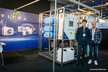


Water management is an integral part of modern greenhouse operations, driven by increasing attention to resource efficiency and stricter recirculation requirements. Italian supplier Vifra has provided water treatment solutions for over ten years, complementing its portfolio of greenhouse climate control systems. "Managing the full cycle starts with water quality for the crop and continues with reusing water whenever possible", says Riccardo Russo, highlighting the role of ultrafiltration (UF) and reverse osmosis (RO) in managing irrigation cycles and nutrient recovery.
"Water is the problem of today and tomorrow. It is going to be more and more a hot topic, something that must be considered," Riccardo says when asked about the company's decision, over ten years ago, to expand from climate control systems focused on humidity, such as dehumidification and high-tech fogging, to also include water treatment systems.
He explains that they see effective water treatment as part of operational continuity and broader responsibility within the food production chain. "Managing the full cycle starts with water quality for the crop and continues with reusing water whenever possible."
 © Arlette Sijmonsma | FloralDaily.com
Technical strategies for source water
Achieving a consistent irrigation baseline is a primary challenge for growers dealing with diverse water sources, from well water and municipal supplies to harvested rainwater. Vifra, as Riccardo explains, offers solutions to make "every type of water ready to use as irrigation water for the greenhouse." And those installations can be diverse: While rainwater is often viewed as an ideal source, its quality can be compromised during collection and storage. "Rainwater is clean when it falls, but once it touches the greenhouse roof, it can contain dust or organic matter from birds. When stored in an open basin and not properly managed, algae can become an issue. Treatment is a requirement."
Their activities spread out over the world though, also including regions where rain is absent. For facilities utilizing water with high mineral or salt content, particularly in regions such as the Middle East, reverse osmosis remains the standard for primary treatment.
Mineral management
For the treatment of drain water, Vifra most often provides Ultrafiltration technology. Unlike RO, which can produce higher waste volumes, UF is designed to integrate into recirculation systems to remove biological and physical contaminants without stripping essential nutrients.
"Everything that is bigger than the mineral gets taken away by UF," Riccardo states, explaining its relevance for growers managing water-borne viruses. "A good UF system must give you certainty that what you circulate is free of viruses, bacteria, algae, fungi, and suspended solids." The ability to filter particles at the microscopic level allows for safe water reuse.
In high-tech greenhouse environments, the cost of fertilizers represents a substantial portion of operational expenditure. UF systems focus on retaining these inputs. Russo emphasizes that the goal is to "keep the fertilizer in that water and remove the virus, bacteria, and other unwanted particles."
"This system allows you to leave what you pay for inside the water," Riccardo adds. Since plants do not absorb all delivered minerals in one pass, recovering nutrient-rich water can improve efficiency. "Why, as a grower, should I throw away water that is still full of minerals that are beneficial for the plant?"
While implementing such systems requires an initial outlay, Riccardo explains that the return on investment is realized through input savings and regulatory compliance. "Of course it is an investment, but we have seen that it pays itself back in a relatively short time."
Site-specific system engineering
Because no two greenhouse operations are identical, Vifra advocates a customized approach to water engineering. Factors such as local climate, crop type, and water chemistry determine whether a facility requires RO, UF, or a combination of both technologies.
"We are also growers ourselves", Riccardo says, referring to their own greenhouse operations in Italy. "Before designing a system, we consider the grower's perspective." He notes that current technology allows highly tailored installations. "What may be perfect for one operation may not be perfect for another. Customization is what the future is about—for us, and for the other growers."
For more information:
VIFRA S.r.l.
[email protected]
www.vifraitalia.it