

"Logistics is a core service provided by Royal FloraHolland. Our growers and buyers expect it to run smoothly. And as far as I'm concerned, that's exactly how it should be; as reliable as 'water from the tap'. That is why I regret that we experienced a few software glitches in the past quarter. Our buyers in particular were affected by the consequences. And that means we are not delivering the service we aim to provide. That is why we are collaborating closely with our own suppliers to prevent a variety of such situations as much as possible."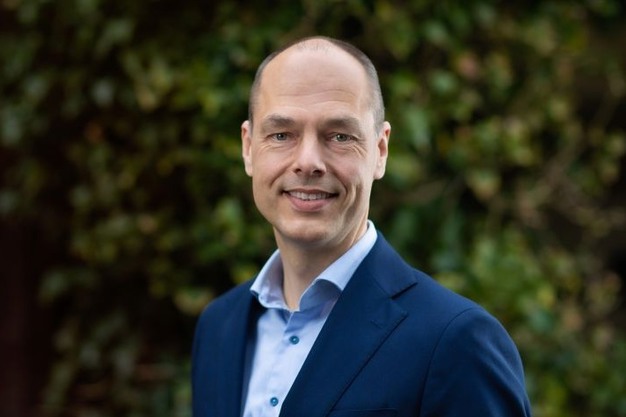 © Royal FloraHolland
Daytrade: an efficient solution to the demand for small quantities of produce
Ensuring members can sell their flowers and plants as effectively as possible: that is the core of the Royal FloraHolland cooperative, according to Leendert-Jan. "Much of what we do in the logistics processes happens behind the scenes. If everything goes well, as a buyer or grower you don't even notice that a major logistics operation is running daily to, from and at Royal FloraHolland's hubs. But behind the scenes, a great deal is happening. Every day we work hard to make those processes even more efficient and sustainable. In doing so, we constantly keep an eye on developments in the floriculture market that influence our services."
For instance, customers are sourcing their flowers and plants in increasingly smaller batches. Leendert-Jan: "The way people buy is changing; buyers prefer not to take on stock risks. As a result, they purchase smaller quantities and products need to be delivered more frequently. Royal FloraHolland handles the logistics for everything traded via the auction. But the trend towards smaller batches is also evident in direct trade. Growers are noticing this. How can they offer an efficient solution for their customers' small direct orders? When we saw this development, we also asked ourselves: how can we add value here for our members and the floriculture chain?"
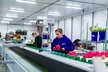
With that in mind, the first trials began a few years ago, which led to the launch of the Floriday Daytrade service last year. Leendert-Jan: "We help growers with the logistics for small orders they have sold directly. Growers bring their products to our site and we arrange delivery to the customers. This can be unsold stock, which they sell whilst the trolleys are at our hubs, or products that have already been sold, which the grower consolidates onto one or more trolleys and delivers to us. We sort the products, combining them where possible with those purchased via the auction or Auction Presales, and deliver them to the buyers. This is a flexible and channel-independent logistics process: it no longer matters which sales channel (auction or direct) the flowers and plants are sold through."
"There are considerable advantages to this way of working. It reduces costs for growers, as they can transport their products to the hubs in a single trip. Moreover, it is better for the carbon footprint, as they do not have to take to the road themselves for every small urgent order. In addition, a grower does not need to invest in a finely meshed (refrigerated) logistics network. Daytrade also enables growers to serve a wider buyer base. Buyers, in turn, have access to a wider range of products."
"We're seeing the number of Daytrade transactions grow every week. The aim is to handle at least 300,000 Daytrade transactions this year. At the moment, we're ahead of schedule. With Daytrade, we really have something that adds value to the supply chain. It requires a different way of thinking and working, resulting in finely tailored sales with a better return for the grower. That's what we're doing it for, of course." Growers interested in Floriday Daytrade can sign up for the waiting list.
AI as a new logistics colleague
Behind the scenes, Leendert-Jan's colleagues are making the order-picking algorithm – which directs all order pickers – increasingly smarter. "Optimal combinations are sought, waiting times are avoided, and if something unexpectedly goes wrong with a delivery, AI helps us find a solution quickly. Here too, we see opportunities to reduce costs and become even more sustainable." To calculate the most efficient order-picking algorithm, you have to take into account a complex list of factors. That list is far too long for a human to properly oversee. Leendert-Jan: "We use the computing power and capabilities of AI in combination with the knowledge and experience of our own planners to make the order-picking lists smarter. We feed the algorithm, so it continuously learns. Last year, it demonstrably helped improve our productivity, and this year we expect to take another step forward. We are also experimenting with the use of AI in Search & Correction. A tool helps colleagues in this department to identify more quickly and precisely how to rectify any errors that may have been made. Developments like these are important, as they enable us to keep improving and to continue making a difference for growers and buyers."
Fewer peaks, more opportunities for mechanisation
"Our logistics staff mainly work in the mornings and for a limited number of hours each day. This creates a high workload and is inefficient for both the staff and the organisation," explains Leendert-Jan. "By spreading the work more evenly throughout the day, we can make the work more predictable and attractive."
"Predicting and reducing peaks is something we've been focusing on for some time. In doing so, we're also looking at the opportunities that robotisation offers us. Automation works best when there's greater distribution, predictability and continuity in our daily logistics process. That makes it more worthwhile to utilise the potential of mechanisation and explore the use of robots in our processes. Deploying an expensive robot for a full working day is more attractive than for just a few hours. That changes the picture."
"Nevertheless, it remains a complex issue, as we are dealing with products that vary enormously in size, shape and fragility. A fully mechanised operation will be difficult, but we see opportunities in sub-processes. We want to experiment further with this in the coming years and, above all, learn how this works in practice, in parts of the building. The priority is to look at how we can support the work of our logistics staff with robots wherever possible."
Better service provision at Floriway
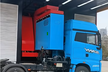
Optimising Floriway's service provision was also a key focus in 2025. "Over the past year, we've improved in several areas: we're on time and orders can be tracked digitally. We've also streamlined the organisation. For instance, if you have a query, you can now always call someone from the planning department directly, who will immediately help you find a suitable answer," explains Leendert-Jan. But he's also honest: "It's great to see that we've set a positive trend, but here too, we're never finished. We want to do our logistics work better every day than we did yesterday."
The implementation of a new planning system for Floriway is on the agenda for the coming period. "The aim is to run with trucks as full as possible and to significantly reduce waiting times. We are also working hard to utilise our drivers, vehicles and routes more efficiently. In this way, we strive every day to provide the very best service at competitive rates." Leendert-Jan fully understands that buyers and growers may still be hesitant to use Floriway's services. This is based on past experiences or stories from others. Nevertheless, he would like to invite them to put it to the test: "Floriway has really made great strides. I hear that from growers and buyers who are Floriway customers too. Are you a grower or a buyer? Then give it a try. Even if you've chosen a different transporter in the past. Put it to the test and find out what Floriway can do for you, for example with a trial period. Or talk to fellow growers and buyers who use Floriway to hear what they think. I'm almost certain you'll be pleasantly surprised."
Source: Royal FloraHolland