

Azaleas are regaining their spotlight – and FlorAmor is leading the way. In this article, Klasmann-Deilmann explores how the company is reinventing this classic plant, from breeding to branding, and setting the course for a more modern and sustainable future.
FlorAmor brings together the breeding, production and marketing of azaleas under one roof. The company has deliberately chosen to manage its entire supply chain in-house. While this offers opportunities, the lengthy process of cultivating azaleas from cutting to flowering plant requires foresight and the right partners.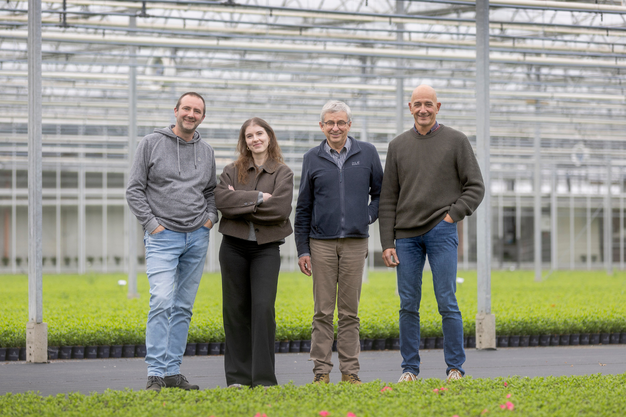 © Klasmann-Deilmann Group
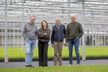
Piet Ravelingien is well versed in the industry. With decades of experience in azalea cultivation, he has witnessed the evolution of the sector: „In 1980, there were 100 million azaleas; now there are just 15 to 20 million. Orchids and other flowering pot plants have taken over the azalea's market share. We are trying to do something about that. We can only achieve this if we differentiate ourselves, hence the breeding. Using genetics to improve the product is innovative, but it is especially important for the future."
„Breeding and searching for new varieties is no easy task," explains Steven Engelen, Breeding & R&D Manager. „We have to be several years ahead of the consumer. Azaleas need to be pruned to encourage growth. This is done three or four times while they are here at the company. What we start today will only yield a finished product in one-and-a-half to two years."
From cutting to flower
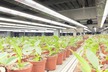
The main cultivation takes place in a 13-centimetre pot. The plant remains in this pot for an average of 18 months. During that period, a handful of cuttings in one pot grow into a fully fledged plant. „We pinch them back an average of three times to encourage the cuttings to branch out and provide new cuttings for ourselves. So, once you start pinching back, it becomes a self-sufficient cultivation process," explains Piet.
Steven continues, "The cut cuttings are handled with care and placed in boxes in the refrigerator. We can store them there for several weeks. This allows us to solve the puzzle in a way that is feasible in terms of practical time management. When taking the cuttings, it is impossible to see the colour of the flowers, so it is important to take a structured approach and maintain an overview. Mixing up the cuttings is a costly mistake that becomes apparent 18 months later. In the meantime, that batch has also been topped three times, so it becomes an expensive mistake."
Azaleas are naturally spring-blooming plants that require a period of dormancy in the cold to flower when the first signs of spring warmth appear. At FlorAmor, they control this natural process. „We mimic winter once the flower bud has developed. The plant is then placed in the greenhouse, where it opens as a result of the warmth. This enables us to work year-round, particularly as new varieties are being developed for this purpose. The season is therefore much longer than it used to be."
Piet: „At two degrees, the plant goes into hibernation. That's when you 'stretch' the winter, although we don't do that indefinitely. Once the plant has experienced the minimum required cold, it's fine. When you take it back out of the fridge and put it in the greenhouse, it starts to grow again at temperatures between seven and twenty degrees, and it flowers."
Hortinno and Flandresse: Two brands, one strategy
Steven: „We want a more modern look for the azalea. We're aiming for an international, prestigious product that flowers for longer and appeals to a wider audience. We need to move away from the old-fashioned image. The threshold of 'winter care' and reflowering, among other things, gives the azalea a reputation as a disposable plant. We absolutely must move away from that."
They are translating this new, modern image into their own brand: Hortinno Home & Garden. „The range still includes traditional azaleas, but also our new, improved hardy indoor varieties. The new flowering types have larger, longer-lasting flowers and extend the plant's life indoors. After the initial flowering period, the hardy variety can be given a new lease of life outdoors. This is a step towards a more sustainable product. The new indoor azalea is therefore a plant for the living room, patio, and even full garden soil."
This fits in with the brand strategy of offering a total package. Piet: „By managing the entire chain ourselves, from breeding to commercialisation, we can also tell the story behind the plant. Our azaleas are of a quality that we develop, grow and market ourselves. That's what sets us apart."
Cultivation in containers
The substrate plays an important role in this story. „Open ground is a thing of the past. Nowadays, we grow everything in containers, so the quality and composition of the substrate is crucial. We want uniform results every time." Azaleas, rhododendrons, skimmias and euonymus are all acid-loving plants, but each species has its own sensitivities and requirements. Even within the azalea family, new varieties sometimes require a different approach.
Steven explains, „Up to 40% of the nutrients we provide to the plant flow out of the bottom of the pot. We recycle that water and the fertilisers it contains because we don't want to waste anything. Cultivation takes place separately from the substrate, forming a closed circuit. Rainwater, which is the best quality, provides the necessary supplements. The first phase of cultivation, the cutting, always takes place indoors. The more extreme conditions mean we have to spend a little more time indoors than before, although it's still important that the late summer is spent outdoors. This results in a stronger, more robust plant."
Knowledge partner
When it comes to acid-loving crops, Alain De Witte of De Witte/Gravelart acts as Klasmann-Deilmann's permanent knowledge partner. The soil handler can draw on decades of experience, both his own and that of previous generations. „Since 1968, our history has run parallel to that of Klasmann-Deilmann. First with peat directly from Germany, and later with finished substrates from Ingelmunster and Bruges. Those substrates are evolving, just like the raw materials we use to make them.
In the beginning, it was forest soil. The humus layer from coniferous forests is acidic, airy, and permeable to water. Later, peat was added, which eventually led to ready-to-use substrates. The substrate requirements are considerable, which is logical for a plant that has to get everything it needs from one pot for one and a half to two and a half years." Hannelore Verbeeck, R&D engineer for substrates at De Witte/Gravelart, adds: „The low pH and draining effect of the former forest soil can be found in peat. The origin of the peat, its hardness, structure and stability all play a role in this. And it doesn't stop with peat. For over 15 years, we have been adapting compositions with coconut fibre and GreenFibre®. Tests with advisors proved its success. In fact, the 'old' azalea cultivation was already ahead of today's sustainability story."
Peat-free(er)
New substrates were being tested at FlorAmor 5–10 years ago, and interest in alternatives has increased ever since. „Our retail customers were asking for it," they say. „'No peat' used to be the idea, but people now seem to be moving away from that. Cost and quality also play a role, as does the ban on chemical agents. For us, the goal is to use as little as possible. We have experimented extensively in this area. We know that it will be a year and a half to two and a half years before we see the results. This makes us a little cautious. Currently, 50% of our products are alternatives, which is positive."
Alain: „The biggest challenge is controlling the acidity level. Over such a long period of cultivation, peat has just the right properties and qualities. You can't change the substrate and expect the plant to remain unaffected. A substrate without peat has less buffering capacity in various areas, so you have to refine everything. It actually becomes a different type of cultivation."
Piet: „Expectations are high among customers, who naturally want the best plants. Their concerns are our concerns, and we have made significant progress in recent years."
Steven: „The company currently has rhododendrons growing in an alternative substrate. So we can do it! The peat-free option is available. It has been tested, and with sufficient additional guidance, it delivers results. Given the current quality standards, we realise that we cannot simply replicate the watering and fertilisation methods and that the pH factor requires particular attention. We are proud to have already taken many steps forward. This applies to peat-free (or peat-reduced) working methods, crop protection rules and energy efficiency, for example."
Hannelore Verbeeck: „We have considered alternatives, but not with the intention of blindly replacing existing practices. Our choice is a vision for the future. We use raw materials that we trust and that will be available in the future. As a supplier, producer and grower, our goal is to reduce the footprint of each link in the chain. It's not about replacing peat with an inferior alternative that requires more transport or has no security of supply."
Piet: „That will only work if we work with the right partners. Partners who think along with us, share knowledge, and believe in innovation without compromising on quality."
For more information:
Klasmann-Deilmann Benelux
[email protected]
www.klasmann-deilmann.com