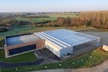


The University of New Hampshire has secured nearly $2 million in federal funding to renovate and enhance the Macfarlane Research Greenhouses and create a new Center for Excellence in Education and Discovery for Plant Science (CEED Plant Science). The appropriation, spearheaded at the federal level by New Hampshire Senator Jeanne Shaheen, will improve UNH's work to develop cutting-edge research in plant management and train the next generation of innovators to support the greenhouse industry in the Granite State.
Horticultural and ornamental production in New Hampshire greenhouses supports nearly 2,000 jobs and contributes $106.7 million annually to the state's economy. The new Center for Excellence in Education and Discovery for Plant Science will leverage UNH's world-class scientific and operational expertise to lead workforce training and develop insights tailored to local grower needs.
 © University of New Hampshire
"I was proud to have secured funding for the Center for Excellence in Education and Discovery for Plant Science at the University of New Hampshire. As New Hampshire's agricultural sector faces changing and increasingly challenging weather conditions as a result of climate change, the state-of-the-art CEED Plant Science will be a hub of agricultural innovation, workforce development, and energy efficiency, helping create a more resilient food supply chain and strengthening local economies across the state," says Shaheen.
Despite the Northeast facing fast-growing weather-related risks to its $21 billion agricultural industry, the region has seen the least greenhouse expansion in the U.S. over the past decade. CEED Plant Science will help generate knowledge and expertise to help grow New Hampshire's greenhouse production and strengthen its agricultural sector resilience while positioning the state as a regional leader in agricultural innovation and discovery.
"CEED Plant Science will help rejuvenate UNH's impact and leadership in New Hampshire and the region in supporting and growing workforce development in our agricultural industries. I am excited to see UNH playing a significant role in developing highly trained professionals who have expertise to support our industry's needs on day one, and it will also grow our sector by bringing state-of-the-art innovations and hands-on research experience at UNH," says Henry Huntington '80, president and CEO of Pleasant View Gardens.
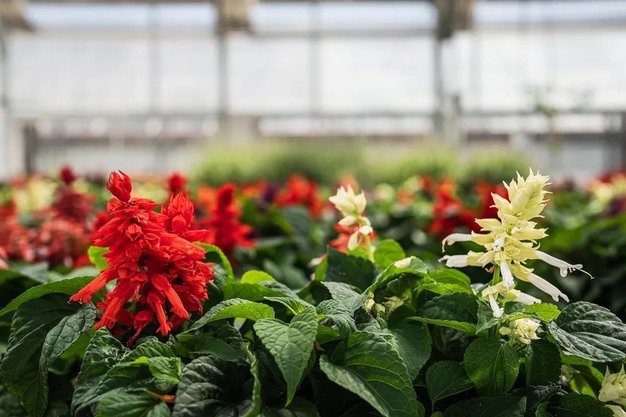
The UNH Macfarlane Research Greenhouses complex is both a beloved fixture on the UNH campus and a hotbed of research activity, typically supporting upwards of 20 to 30 research projects every year. But much of its infrastructure dates back to the 1940s. The renovation will replace antiquated greenhouse structures with a new, state-of-the-art greenhouse and include redesigned and renovated shared lab spaces and equipment, a learning classroom, and renovated operation staff support spaces.
When finished, the updated facility will support research, education, and extension programming, as well as public-private partnership incubation activities. Its operations will also be far more efficient, greatly reducing maintenance costs and significantly reducing the energy footprint with modern plumbing and HVAC systems.
"CEED Plant Science will make a significant long-term impact on New Hampshire's agricultural businesses, enabling current greenhouse operators and food producers to be more resilient and prosperous and attracting new investments in food and ornamental crop production facilities around the state," says Doug Cole '77, president of D.S. Cole Growers.
"Greenhouse agriculture in New Hampshire has the potential for strong growth, but it faces climate, pest, disease, and economic challenges that are specific to New Hampshire's unique conditions barriers," says Anton Bekkerman, director of the NH Agricultural Experiment Station and associate dean of the College of Life Sciences and Agriculture. "Scientific discoveries and education made possible by the renovated CEED Plant Science facility will directly help address information gaps and support the sector's growth and sustainability."
Source: University of New Hampshire