

This year marks a golden milestone for the University of Florida's ornamental breeding program, and the celebration comes with a splash of color — the program's 50th caladium cultivar.
Well, make that 50th and 51st.
The breeding program is critical to growers because Florida leads the world in caladium bulb production.
In five decades, UF has become a powerhouse in caladium innovation, and while breeder Zhanao Deng can't take credit for all the caladium plants from UF, he's responsible for 38 of them during his 20-plus years working for the university.
Like any scientist, his work is no accident. Deng spends countless hours pairing the right parent plants to develop caladiums that nurseries and consumers will want.
"As a plant breeder, I am passionate about developing new cultivars that can satisfy needs of the industry and consumers," said Deng, a professor of horticultural sciences at the UF Institute of Food and Agricultural Sciences (UF/IFAS). "Caladiums can rival many flowers with their colorful, attractive leaves. "They're easy to grow, and their color shows for many months."
In a new research paper, Deng describes how he developed the latest varieties – Juicy Gossip and Passion Punch — to resist disease.
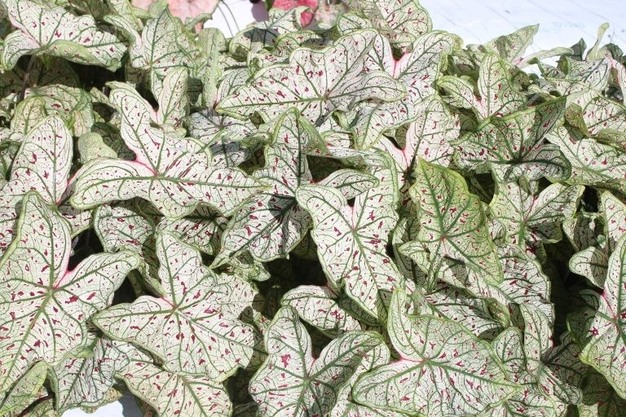 © Keri Druffel, UF/IFASJuicy Gossip caladiums
Make no mistake about it: They still look vibrant. But, at the request of Florida's caladium growers, Deng bred these plants to fend off Pythium rot and Fusarium tuber rot.
"Most caladium growers have used the same lands for caladium tuber production for several decades," Deng said. "When the pesticide methyl bromide was phased out, growers asked us to improve disease resistance in caladiums. This is not only important to them for tuber production but also for plant performance in the gardens."
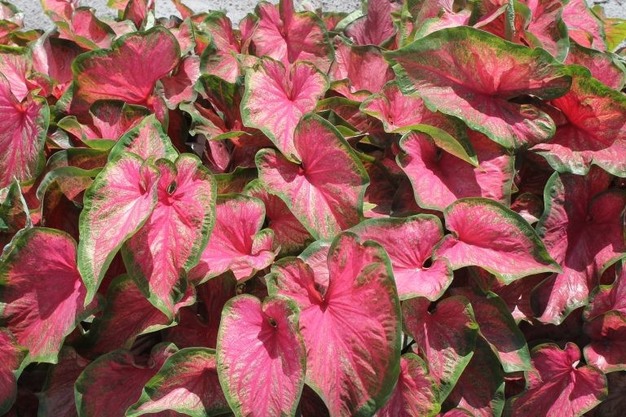 © Keri Druffel, UF/IFASPassion Punch caladiums
He and his research team screened existing varieties and found several genetic sources of resistance to the major diseases in the field and during storage.
"These are among several new cultivars with improved disease resistance," said Deng, one of 31 UF/IFAS plant breeding faculty members across Florida.
Researchers also see these varieties as resistant to nematodes. Plus, they're very hearty, Deng said. For example, they don't sunburn (turn other colors) as easily as other cultivars, they're tall and wide and have long, wide leaves.
Deng credits the team for testing disease and pest resistance on these latest varieties. Researchers on the team are Natalia Peres, a professor of plant pathology and Johan Desaeger, an associate professor of nematology. Deng, Peres and DeSaeger are faculty members at the Gulf Coast Research and Education Center.
Source: UF/IFAS