

"Those who seek to pluck roses must respect their thorns," goes the saying. Yet, respecting thorns while being pricked by them felt nearly impossible. "Ouch, it stings. Ouch, it stings. Ouch!"
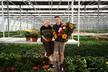
May, the month of family, is traditionally a peak season for the floriculture industry in Korea. This is due to Parents' Day, Teachers' Day, Rose Day (May 14), and Coming of Age Day (May 18). Among the approximately 379 million cut flowers sold annually, roses account for about 30%, the highest share. However, farmers' faces are not bright. Amid high inflation, flowers are perceived as "luxury items," and fertilizer and heating costs have risen due to the aftermath of the Middle East conflict. On the 7th, I visited the rose farm "Ha-el Roses" in Goyang City, Gyeonggi Province, to hear farmers' stories and experience cultivation and harvesting.
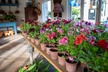
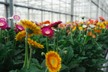
Entering the 1,000-pyeong (approx. 3,305㎡) vinyl house, the scent of roses spread. The farm cultivates about 50 varieties, including Clarins and Christine. Yellow, pink, white… They harvest around 100 bunches, or 1,000 stems, daily.
Thin hoses supplying water and "nutrient solution (liquid fertilizer)" were spread across the house. Lee Soo-jung makes the solution every five months using about 10 types of fertilizers. One key ingredient, nitrogen fertilizer, relies on "urea," whose supply has been unstable due to the Middle East crisis. Plants like roses, which continuously bloom, consume large amounts of nitrogen. Lee said, "The nutrient solution will run out in two months, and rising fertilizer costs are a major concern."
Read more at The Chosun Daily