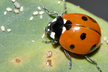


The greenhouses at Foster Flowers Wholesale Nursery in Whitefish look like most other greenhouses. The floors are covered with trays of young plants and rows of hanging baskets are overhead.
Upon closer inspection, multiple packages among the plants become apparent. Small plastic boxes on carboard backings hang from overhead baskets and tea bag-sized pouches on sticks dot the flats of plants on the ground. Each contains about half a teaspoon of what looks like fine sawdust with a sprinkling of dark specks.
Those specks are what makes this nursery special. They are the stars of the greenhouses, aside from five beloved cats who patrol the grounds, and they are bugs. That's right, bugs.
"Those are mummies of a little miniature wasp," Owner Travis Foster said, pointing out the specks which are the cocoon stage of the soon-to-be flying insects. "It doesn't sting, but it's in the wasp family, and they hatch over time, and they fly around and they eat aphids."
He said the aphid-hunting wasps look more like flying ants and are only a couple of millimeters long. Another sachet holds a beneficial bug that prefers to eat thrips. Employing bugs to fight bugs is one kind of biological practice – the use of a product derived from natural sources to protect plants from pests. Each of the predatory bugs has a specific pest bug that it likes to eat.
Read more at Whitefish Pilot