

This week, Royal FloraHolland auctioneer Paul Freriks takes us to Kenya, where he recently visited fourteen flower farms. The cultivation of seasonal flowers is expanding in Kenya, supplying a significant portion of the flowers sold at the clock. But Kenya also faces challenges. Paul shares insights into market developments and the role of Royal FloraHolland in supporting growers worldwide.
"This was my third visit to Kenya as an auctioneer. With an average of three farm visits per day and long distances between locations, the days were long and sometimes bumpy. But what incredible flora and fauna! In terms of cultivation, there are both challenges and opportunities here."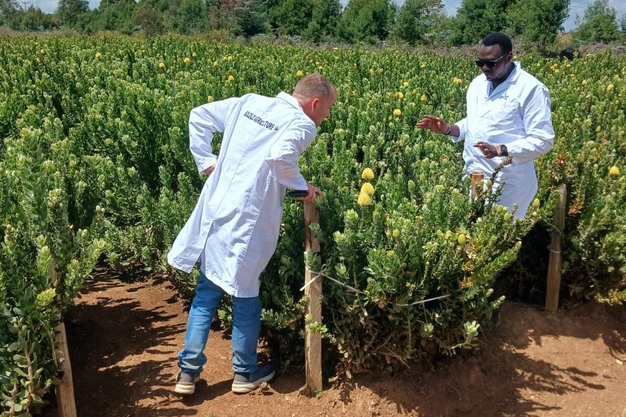 © Royal FloraHolland
Strong growth, but also challenges
"Global demand for more variety in flowers is driving strong growth in Kenya's seasonal flower production. Growers are switching crops or expanding operations, and breeders are becoming more active. Currently, an estimated 1,100 hectares are in seasonal flower production. After roses, seasonal flowers are the most widely grown in Kenya."
"The farms are located at high altitudes, between 1,600 and 2,300 meters. This creates good—but variable—growing conditions. The exact location—even which side of a mountain a farm is on—can make a significant difference in temperature, rainfall, and the risk of storms or hail."
Price pressure
"Earlier this year, we saw large volumes on the market. This put pressure on prices, including for Kenyan flowers such as gypsophila and limonium. Combined with already high costs, this raises questions among growers about market trends and business strategy. Is it the market, or my flowers? Should I change how I work, or trust in what I am doing? These are entirely reasonable and logical questions."
Understanding the clock from abroad is challenging
"For growers abroad, the distance and multiple links in the chain make it even harder to understand the Dutch clock and market. That's why I use my visits to explain market figures, trends, and Royal FloraHolland's strategy. Topics like Central Auctions, crop rotation, product diversification, sustainability, and Clock Pre-Sales often come up."
Personal contact makes the difference
"For the clock, it's essential to have a good and diverse supply throughout the year. But for us auctioneers, it's equally important to know the faces behind the flowers and farms we handle daily. That's why I enjoy visiting in person. It allows us to get to know each other, ask questions, and provide tips or advice. These visits are crucial to gain insight into cultivation practices and the needs or challenges of our members. By understanding what they face, we can serve our members even better."
"From my own experience, once you've met in person, collaboration becomes much smoother. A phone call or email flows naturally afterward. Personal contact ultimately strengthens our cooperative values: 'Together we are stronger.'"