

The evolution of the horticultural market in Latin America continues to drive demand for seeds with higher yields, adaptability, and genetic quality. In this environment, TAKII Seed, a Japanese company operating in more than 15 countries, is strengthening its position by developing new varieties tailored to diverse production conditions.
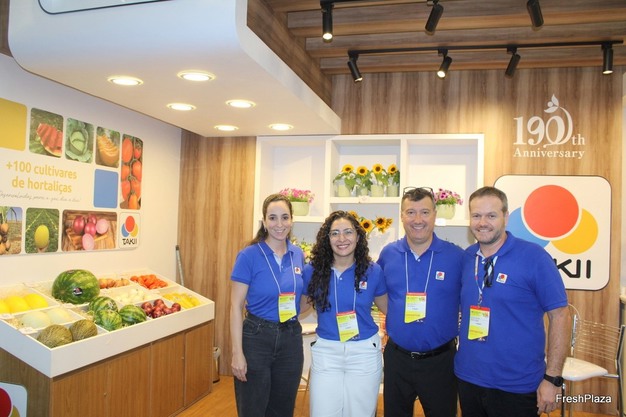
José Francisco Fernandes Gomes, the sales leader for vegetable seeds in Brazil, Paraguay, and Bolivia, highlights the company's long-standing history: "It is a Japanese company founded 190 years ago, based in Kyoto, Japan, offering a diverse portfolio of over 5,500 vegetable and flower seed varieties across more than 75 crops."
 © Diana Sajami | FloralDaily.com
The company prioritizes research, production, and agronomic validation before commercialization. "We operate an experimental station in São Paulo and collaborate with partners in Rio Grande do Norte (Mossoró) to conduct all agronomic performance trials for the hybrids," explains José Francisco. This approach enables us to assess how well the seeds adapt to various soil and climate conditions—an essential step in ensuring successful production.
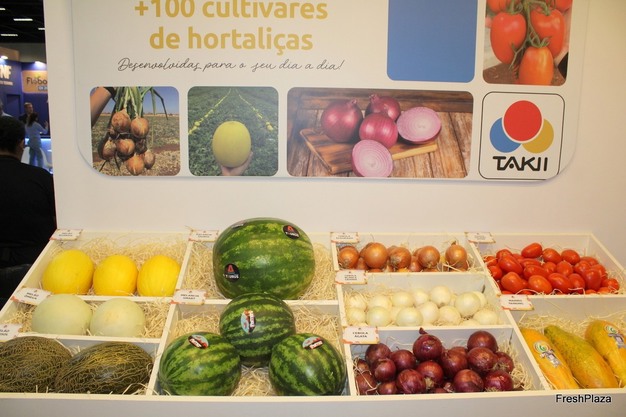
TAKII has added new varieties to its current portfolio across key segments. These include the Taurus watermelon, Riversol melon in the yellow Canary melon category, the hybrid piel de sapo Melisol, and onions like Eldorado, Blanca Grande, Ceviche, and Agata. They also introduced tomatoes such as Astra and a new variety in development labeled as code 240. "These varieties address the need for increased productivity, stability in the field, and higher yields for our growers."
 © Diana Sajami | FloralDaily.com
On a global scale, onions are the company's primary crop. "Worldwide, onions are the main crop, and in Brazil, it is no different," José Francisco emphasized. Nonetheless, he noted the growing development of other segments, such as tomato rootstock, Japanese cucumber, and melons, particularly in the context of agro-exports.
TAKII's portfolio also includes flower seeds, with a particular focus on sunflowers and lisianthus, which are considered key products in this segment. "Our main flower crops are sunflowers and lisianthus," he says.
 © Diana Sajami | FloralDaily.com
Regarding the current challenges, the market is experiencing a complex situation characterized by price volatility. "Low prices make it very difficult for growers to reinvest in technology," José Francisco stated, highlighting the direct effects on planting choices and the uptake of new crops.
Despite this context, the outlook is for a gradual recovery. "We expect an improvement by the second half of 2026," he said, further projecting more significant growth by 2027, driven by the company's expanding portfolio.
For more information:
José Francisco Fernandes Gomes
TAKII Seed
Brazil
Tel: +55 11 93429 8936
Email: [email protected]
www.takii.com.br