

Over the course of five years, researchers sequenced 55,000 genes to produce the first rose pangenome. Coordinated by INRAE together with the ENS de Lyon, Huazhong University (Wuhan) and the Chinese Academy of Agricultural Sciences (Shenzhen), the work provides valuable resources for breeding high-quality roses better suited to global change. The findings were published in Nature Genetics.
Roses are among the most economically significant ornamental plants worldwide, with widespread applications in the cut flowers, garden, and cosmetics industries. Yet fewer than 10% of rose species have contributed to modern cultivated roses. Until recently, available technologies did not allow to fully sequence the Rosa subgenus. Over five years, an international research team coordinated by INRAE together with ENS de Lyon, Huazhong University (Wuhan) and the Chinese Academy of Agricultural Sciences (Shenzhen) combined state-of-the-art strategies and tools to sequence and decode the complete genetic information of rose plants representing the full genetic diversity of the genus Rosa. The researchers annotated more than 55,000 genes, producing the first rose pangenome. Among them, 16,844 are essential genes shared by all rose species and varieties, while around 4,000 genes are found only in certain roses.
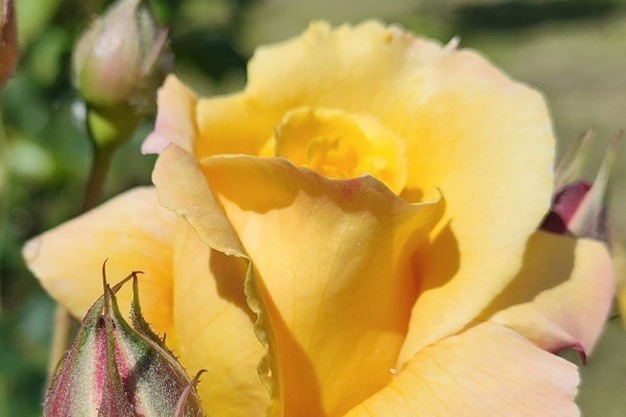 © National Research Institute for Agriculture, Food and Environment
The study highlights a complex evolutionary history shaped by gene transfer and the evolution of different groups in distinct environments. Around 2 million structural variations were identified, offering a broad overview of rose diversity. The dataset also makes it possible to pinpoint genetic regulators: non-coding sequences that influence traits such as continuous flowering, number and discoloration of petals – which may take different forms across species.
The findings also improve our understanding of the molecular mechanisms underlying several traits such as double flower, recurrent flowering and colour. They open up new avenues for exploring additional traits of interest and could help speed up breeding and improvement programmes in roses – whether the aim is to enhance ornamental characteristics (particularly fragrance), improve attractiveness to pollinators (plant–insect interactions influenced in particular by fragrance and colour), or strengthen adaptation to global change through greater resistance to biotic and abiotic stresses). This knowledge could also be applied to the improvement of other species in the Rosaceae family (including fruit trees), and to other ornamental plants.
Source: National Research Institute for Agriculture, Food and Environment