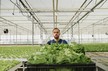


As April is recognized by the Colombian Government as Children's Month, highlighting the importance of children's well-being and development, Colombia's floriculture industry is reinforcing its commitment to the next generation by investing in education, safe environments, and opportunities for children in rural communities.
Beyond its role as one of the world's leading exporters of fresh-cut flowers, the industry has positioned itself as a driver of social development in the regions where it operates. Through coordinated initiatives led by Asocolflores and supported by growers across the country, Colombian floriculture is contributing to the creation of safer, more inclusive and opportunity-driven environments for children.
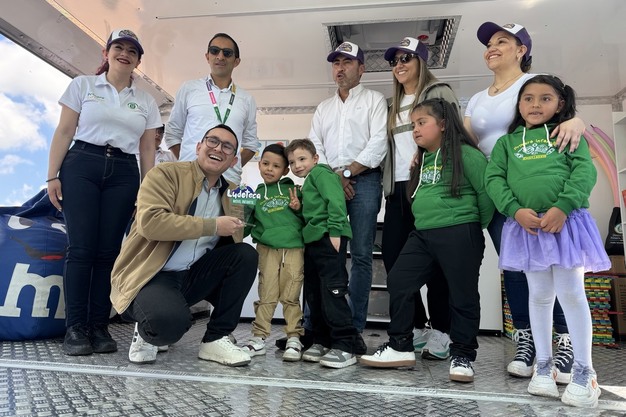
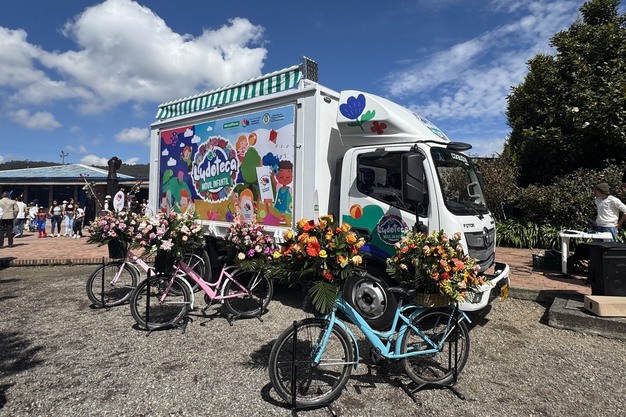
This year, the industry marks Colombian Children's Month with the delivery of a new learning and play space—a ludoteca—in the municipality of Madrid, Cundinamarca. The initiative is expected to benefit more than 13,000 children, particularly in rural areas where access to recreational and educational infrastructure remains limited. Designed as a mobile unit mounted on a truck, the Mobile Children's Ludoteca will travel across the municipality's 16 rural communities, prioritizing hard-to-reach areas. Through a pedagogical approach that combines play, art, literature and environmental exploration, it will foster cognitive, emotional and social development in early childhood while bringing learning opportunities directly to the communities that need them most.
 © Asocolflores
"Export floriculture demonstrates that international trade is not only a driver of economic growth, but above all social development. Its global success creates real opportunities for families and communities. On Children's Day, we reaffirm that export competitiveness must translate into well-being for children, promoting safe environments, access to education and tools for their integral development," said Laura Valdivieso, president of the Association of Colombian Flower Exporters, Asocolflores.
Child well-being is a priority in the regions where flowers are grown. As an industry that is free of child labor, Colombian floriculture actively participates in initiatives such as the Colombia Network Against Child Labor, promoting the protection of children's rights and strengthening safe environments for their development.
In parallel, long-standing programs such as "Cultivemos la Paz en Familia" (Cultivating Peace at Home), with more than 25 years of implementation and national and international recognition, have contributed to strengthening family and social environments based on coexistence, respect and peaceful conflict resolution—key elements for children's growth and well-being.
 © Asocolflores
Through targeted initiatives focused on education and opportunity, the industry has implemented concrete actions that directly impact children in rural areas. Programs such as "No Child Left Out of School" have supported school retention by delivering more than 4,300 school kits since 2023 in flower-growing municipalities across Cundinamarca, Antioquia and the Coffee Region. In 2026 alone, the initiative has already reached nearly 1,800 children in 23 educational institutions.
Additionally, through the strategy "Floriculture Grows with Its People," Asocolflores has promoted the improvement of educational and sports infrastructure in municipalities such as Tabio, Facatativá, Nemocón and Tocancipá, benefiting more than 1,300 children with better spaces for learning, recreation and community interaction.
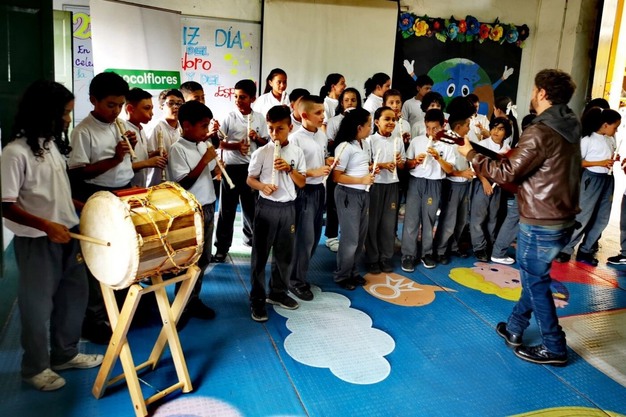
These efforts are complemented by programs aimed at strengthening life skills and emotional development. One example is the ToKANDO Scholarships program, developed in partnership with the Incolmotos Yamaha Foundation, which has benefited around 300 children and young people in Antioquia through music education, fostering cognitive, emotional and social skills.
 © Asocolflores
Together, these initiatives reflect how Colombia's floriculture industry not only generates employment and economic activity in the present, but also actively invests in the future of the communities where it operates. By creating opportunities for children, the industry contributes to building more resilient territories and strengthening the social fabric in rural Colombia.
"Beyond environmental sustainability, which has positioned Colombian floriculture in international markets, it is important to highlight the tangible results of the social sustainability generated by this industry —results that are not always visible. Thousands of children now have access to education, improved spaces and development opportunities, demonstrating how export activity can translate into real progress for rural communities," Valdivieso concluded.
For more information:
Asocolflores
https://asocolflores.org/