


At the AIPH Horticultural Industry Conference in Sydney, Mike Mehigan, CEO of Greenlife Industry NSW, shared a personal and industry-wide perspective on how plant retailing in Australia has shifted over the decades—and what independent garden centres must do to stay relevant. © Ludovic Vilbert, Inwardout Studio
From local roots to industry change
Mike opened with his own story, having moved from the UK to Australia in 2002. Shortly after arriving, he and his partner Susan purchased a small garden centre north of Sydney, a business with roots dating back to 1952. They ran it for over 20 years before closing in December 2024 due to mounting pressures.
"We were really part of the community," Mike said. "Customers didn't just come to buy plants—they came for advice, for connection. I think that's a key to independent retail being successful."
That sense of community was once central to the sector. In the 1950s, 60s and 70s, garden centres largely dominated plant retailing in Australia. With limited competition and strong consumer interest in gardening, the market was relatively straightforward.
Competition and changing consumer habits
By the late 20th century, that began to change. Large-format retailers entered the market with aggressive pricing and expansion strategies, reshaping consumer expectations. "Their low-price model resonated with a lot of consumers," Mike explained. "And more recently, we're seeing self-service models, where information comes from labels or QR codes rather than staff."
At the same time, lifestyles shifted. "Weekends became filled with sport, socialising, and other activities," he said. "Gardening became less of a priority." Environmental challenges also played a role. Severe droughts in the early 2000s reduced demand and impacted production across eastern Australia.
Pressure on the business model
Beyond competition, structural pressures have intensified. Rising land values have become a major concern for garden centres. "In many cases, the land is worth more than the business sitting on it," Mike noted. "If you don't own your site, landlords are expecting returns based on that land value, and that creates real pressure."
At the same time, fewer new entrants are stepping into the sector. "We're not seeing many young entrepreneurs coming into garden centre retailing," he added.
A product still in demand
Despite these challenges, Mike emphasized that plants themselves remain highly relevant. "Our product is still very relevant—probably more than it's ever been," he said. "People enjoy plants, whether it's indoors or in the garden."
However, today's consumer expects ease and efficiency. "People are time-poor. They want simple solutions." Technology plays a central role in meeting those expectations. "Online platforms are an absolute must," Mike said. "People want to shop 24 hours a day, seven days a week."
He pointed to data showing that 16.8% of retail transactions in Australia are online, with projections rising to around 20% by 2030. Evening purchases, he noted, tend to be higher in value. "After 9pm, people are spending more," he said.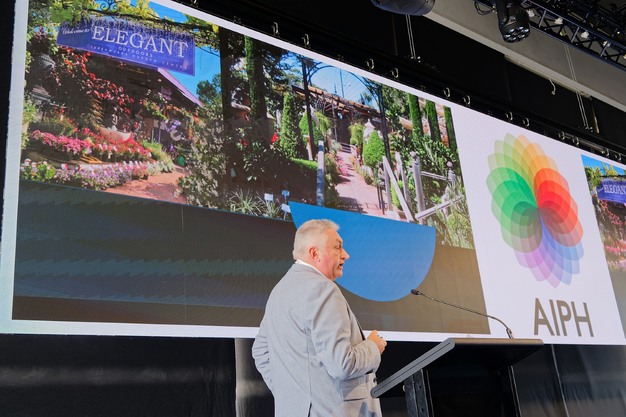 © Ludovic Vilbert, Inwardout Studio
Connecting digital and physical retail
Even with the growth of e-commerce, physical stores remain critical. "Eighty-one percent of consumers will check your business before they buy," Mike said. "But 98% still visit a bricks-and-mortar store."
Delivery expectations are also shifting rapidly. "Saying you'll deliver next week is probably gone," he noted. "People want convenience and speed, and they're prepared to pay for it."
Standing out in a crowded market
For independent retailers, differentiation is key. Mike stressed the importance of positioning the garden centre as a trusted source of expertise. "Make yourself the local expert," he said. "Whether it's how to grow plants, how to care for them, or explaining the benefits—those messages matter."
Staff play a central role in delivering that experience. "You need qualified, motivated staff who engage with customers," Mike said. "Not people hiding from them."
He also highlighted the value of workshops and in-store events, from practical demonstrations to supplier-led sessions. Social media, meanwhile, should focus on timely, practical advice. "When people think about buying a plant, you need to be front of mind," he said.
Customer engagement can go further, with targeted events for loyal clients. "Invite your best customers in, show them new products, give them an experience," Mike suggested.
Sustainability and community connection
Sustainability is increasingly influencing purchasing decisions. "People want to know your business is doing the right thing," Mike said, pointing to recycling initiatives and the need to address plastic use within the industry.
He also encouraged retailers to engage with their communities through local charities, garden clubs and organisations. "Those groups become your advocates," he noted.
Working closer with growers
Stronger collaboration with growers is another area of opportunity. Mike sees potential in models such as drop-shipping, where products are delivered directly from growers to customers. "You might only need 10 to 20 good suppliers with live inventory," he said. "That allows you to sell a broader range without holding stock."
He also urged retailers to stay close to product development and innovation. "Consumers love new and exciting plants," Mike said. "Make sure you're the first locally to have them."