

As demand for locally grown flowers rises across the Southeast, the Clemson Cooperative Extension Service has released a new production guide designed to help growers meet that demand with research-based strategies and practical business tools.
The Southeast Outdoor Specialty Cut Flower Production manual is the first major Clemson Extension resource of its kind in more than two decades, offering updated guidance for commercial growers, hobbyists, home gardeners, homesteaders and diversified farmers looking to add flowers to their operations.
The publication is available as a free online PDF through Clemson Extension Horticulture. Printed copies can be purchased through the Clemson University Marketplace.
Cut flowers are flower heads, buds and sometimes stems, foliage or twigs that have been cut from parent plants for decorative use, such as in vases, bouquets or wreaths.
"There has been an explosion of new cut flower growers, but almost no modern Extension information to support them," said Zachary Snipes, Clemson Extension horticulture program © Clemson HGIC assistant team leader (pictured right). "So much has changed in 26 years. Growers truly needed a new resource."
The guide walks growers through the basics of cut flower production, including site selection, soil fertility, pest and disease management, and postharvest handling. It also covers business planning and marketing, with worksheets to help growers think through costs and sales.
One chapter focuses entirely on flower varieties, highlighting species and cultivars commonly grown in the Southeast.
"There were simply too many varieties to list, which is why we devoted a full chapter to help growers navigate their options," Snipes said.
The publication is intended for a wide range of growers, including commercial producers, hobbyists, home gardeners, homesteaders and diversified vegetable farmers seeking to expand their offerings.
While developed with South Carolina growers in mind, much of the information applies broadly across the Southeast.
Snipes emphasized the goal is to help both new and experienced growers succeed in a market that continues to gain momentum.
"Whether someone is starting their first half‑acre plot or adding flowers to an existing farm, this manual gives them research‑based, up‑to‑date guidance they can trust," he said.
South Carolina cut flower industry
According to the South Carolina Department of Agriculture, the state's cut flower industry is growing, driven by a surge in new, small-scale and specialized farms joining local programs.
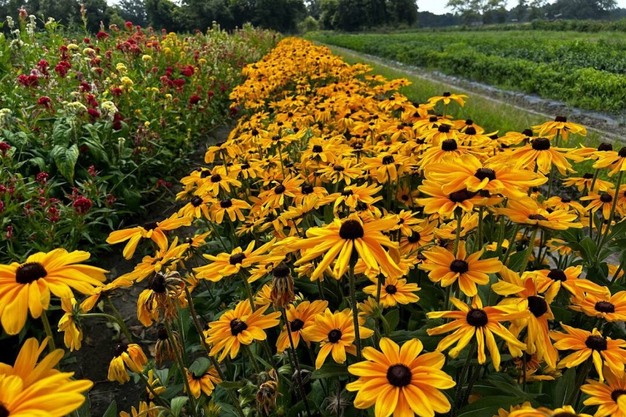
Local flower farming is gaining momentum due to high demand for farm-to-table products and agritourism, bolstered by specialized cooperatives.
 © Clemson HGIC
The state's geography and diverse climate are well-suited for production. Flowers can be grown year-round in South Carolina.
"Cut flower farming is a part of the state's landscaping and horticulture industry, a colorful one at that," said S.C. Commissioner of Agriculture Hugh Weathers. "It makes major contributions to agribusiness in the Palmetto State.
"The entire landscaping and horticultural services sector is our second largest ag sector after poultry processing, with a nearly $1.5 billion direct economic output annually."
With interest in local flowers continuing to grow, Clemson leaders say the new manual can help more producers build profitable, sustainable businesses across South Carolina and beyond.
The project began in January 2025, when the Clemson Cooperative Extension Service horticulture team secured grant funding from the Association of Cut Flower Growers to update resources for growers in South Carolina and across the Southeast.
The most recent Extension manual available to growers was published in 2000.
Source: Clemson University