

UAE Flowers has reported that the UAE floral industry has successfully navigated one of the most disruptive supply-chain stretches in recent years, with March 2026 marking the peak of the pressure. Despite a 120 percent increase in the cost of essential floral supplies and sharp temporary spikes across imported flower varieties, suppliers and florists have stabilized operations in time for Mother's Day on May 10, with most flower categories now trading close to 2025 levels.
The most visible remaining impact is on Oasis Foam — the floral foam used as the structural base for nearly every standing arrangement. The wholesale price has risen from 34 AED to 75 AED per box, an increase of approximately 120 percent, with no sign of easing as Mother's Day approaches. Oasis Foam and many related floral accessories, including ribbons, wraps, and packaging materials, are predominantly imported from China, and supply pressure on these categories has remained persistent.
Imported flower varieties experienced sharp but largely temporary increases through the peak weeks of the disruption. Kenya-grown roses, the most popular variety in Mother's Day flowers, rose from 1.8 AED per stem in 2025 to a peak of 2.4 to 2.6 AED in March 2026, before easing to approximately 2 AED for May. Colombia-grown hydrangeas climbed from a 2025 wholesale band of 9 to 13 AED to a peak of 15 to 19 AED. Holland-grown lilies moved from 10.5 AED to a peak of 14 to 16 AED, and have since softened to 11.5 to 13 AED. Filler greens followed a similar arc, with most varieties now trading within range of last year's levels.
The disruption traced to several overlapping pressures in early 2026. A significant share of imported floral shipments was held in airports during the first two weeks of March, and freight charges across the relevant air-cargo routes rose sharply. To keep stock moving, suppliers rerouted shipments by road through Oman and Saudi Arabia, an alternative pathway that allowed deliveries to continue but added cost and time. Several international suppliers also tightened commercial terms during the peak weeks, requiring cash on delivery rather than the credit terms that had previously been standard.
The UAE imports the majority of its cut flowers from a small number of established source countries — primarily Kenya for roses, Holland for lilies and premium varieties, and Colombia for hydrangeas — alongside floral supplies and accessories that are predominantly sourced from China. Each of these supply lines moved through different pressure points during the disruption, and the speed at which they returned to near-normal pricing has varied. Flowers have largely stabilized; supplies have not.
 © UAE Flowers
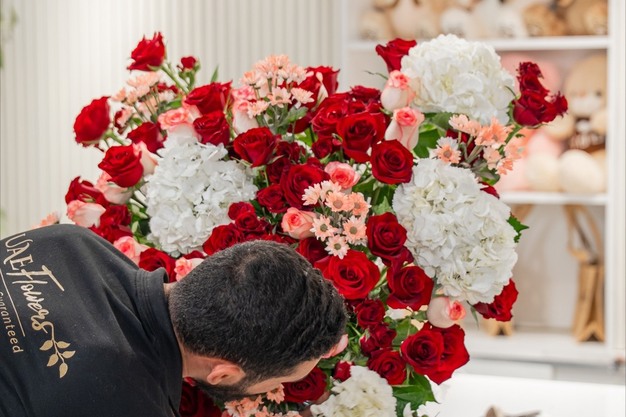
The persistent pressure on Oasis Foam and related accessories has prompted florists across the UAE to adjust how arrangements are constructed for the Mother's Day season. UAE Flowers has expanded the use of reusable arrangement mechanics, prioritized rose bouquets and seasonal styles that require less foam, and adjusted selected Mother's Day designs to reduce reliance on imported supplies where possible. These adjustments are being absorbed at the operational level rather than passed on to customers.
"Customers placing Mother's Day orders this week are not seeing the supply story behind the bouquet, and that is by design," added Aman Arora, Managing Director of UAE Flowers. "Our suppliers worked through a difficult March so that the May 10 weekend would feel like any other Mother's Day for the people sending flowers to their mothers."
Mother's Day on May 10 is observed by a significant share of UAE residents following international traditions. The country also marks Mother's Day on March 21 in line with the wider Arab world, making the UAE one of the few markets where florists prepare for two distinct Mother's Day demand peaks each year. The March 2026 peak coincided with both the Arab-world Mother's Day and the most acute phase of the supply disruption, providing what the team describes as a real-time test of supplier flexibility.
For more information:
UAE Flowers
uaeflowers.com/